
Please follow us on Gab, Minds, Telegram, Rumble, Truth Social, Gettr, X, Youtube, Instagram
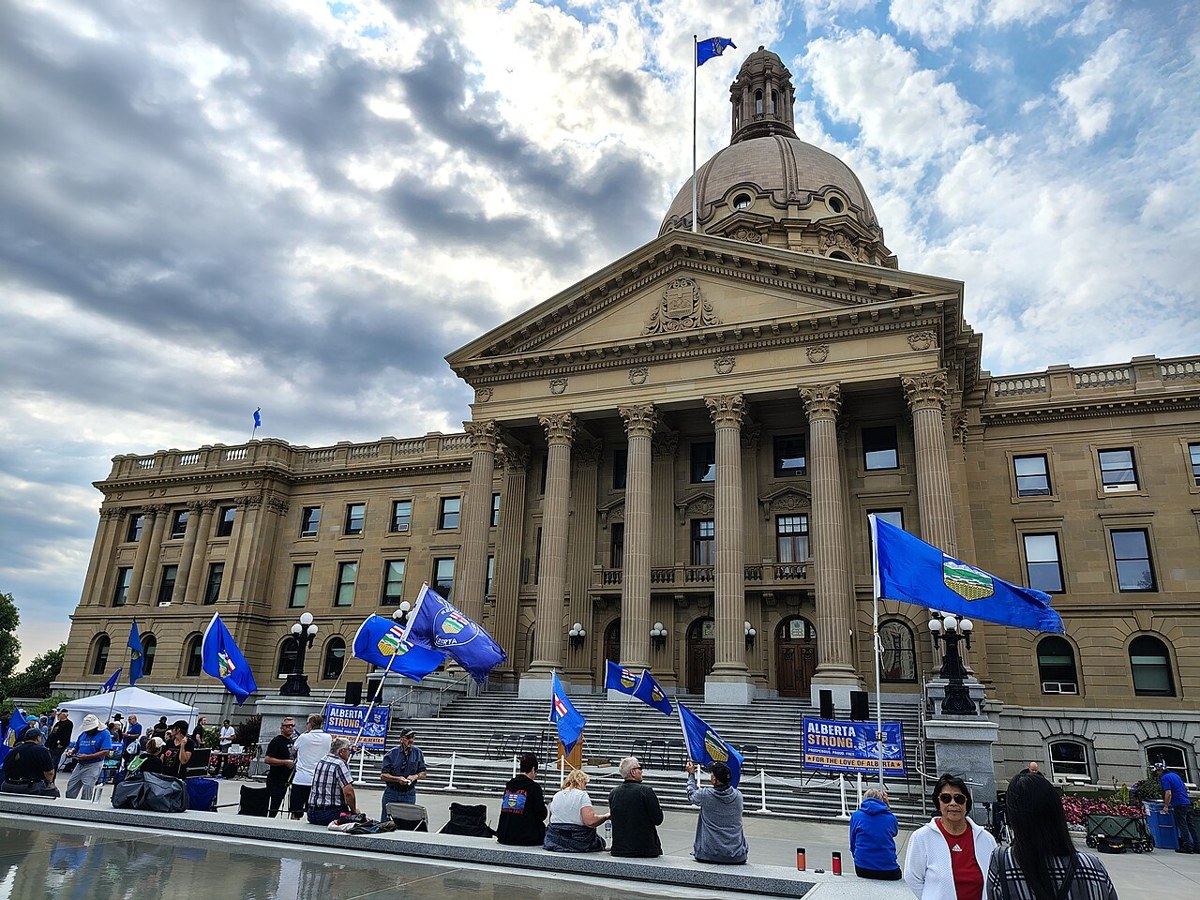
In a non-binding referendum, Alberta voters chose to keep the province a part of Canada. As reported by The Globe and Mail, roughly 76% of voters opted to continue to be part of the country with 24% opting to start the legal process toward a binding referendum on the issue, as outlined in Question 10 of the ten question referendum that was put before voters. Those preliminary Elections Alberta results covered 74% of voting locations.
Alberta Premier Danielle Smith and Canadian Prime Minister Mark Carney both responded to the result. Smith said Albertans have “voted for a stronger Alberta in a united Canada.” Carney said that in the future “Albertans and all Canadians will move forward together with renewed purpose and high ambition.”
The push for separation in Alberta was, at its core, driven by anger at federal policy with respect to the oil industry. Critics of the movement say the energy industry stood to gain from it. But, as with most issues that end up mobilizing mass numbers of ordinary Canadians, it comes down to money. Specifically, how much does Alberta send to Ottawa, and where exactly does it end up?
A recent study from the Fraser Institute, a think tank, estimates that the net contribution of Alberta to the federal government will total $321.9 billion between 2007-08 and 2026-27. That figure is nearly four times the net contribution of British Columbia, which would total $87.8 billion over the same period, and more than five times the net contribution of Ontario, which would total $59.6 billion over the same period. The other seven provinces were net recipients over that stretch, according to the study, which concluded that taxpayers elsewhere would have to pay an additional $1,007 per year on average to keep federal spending where it is without Alberta’s contribution, as the National Post reported. “Many Canadians don’t realize what a sizeable contribution Albertans make to federal finances and how taxpayers in other provinces benefit from it,” said Tegan Hill, the Fraser Institute’s director of Alberta policy and a co-author of the study.
A look at the money flows between provinces is also illuminating. Quebec, for example, will receive $13.9 billion in Equalization payments in 2026-27, or roughly half of the $27.2 billion distributed through the program nationally. In major transfers, Quebec receives some $30.3 billion against $9.2 billion in transfers to Alberta, which works out to $1,792 per person in the western province compared to $3,317 per person in Quebec, according to Finance Canada. Alberta receives no Equalization at all.
In Toronto, the commitment of more than $4 billion from the federal government for the Ontario Line is the largest federal public transit investment in the city’s history, according to Ottawa. It is part of a $10.4 billion package of funding for four rapid-transit projects in the Greater Toronto Area announced in 2021. Ottawa has generally committed to cover up to 40% of eligible costs of the projects under construction, a commitment that has remained constant as the estimated cost of the entire project has risen.
The separatist movement might disappear but the issue that fueled it will not disappear. That is the basic fact that Ottawa has so far failed to get across to ordinary Albertans: that their province sends far more money to the federal government than it receives and that money is used to fund programs and grants for the other provinces. Economist Jim Stanford argued in The Tyee that Alberta pays no money to Quebec or any other province, because Equalization is funded from general federal revenues and makes up only about four percent of federal spending. That is a point of accounting that does not address the basic issue.
The vote is not the end of the matter, said leaders of the main pro-separatist group, the Alberta Prosperity Project. Lawyer Jeff Rath told supporters that the APP would now concentrate on trying to take control of the governing United Conservative Party, within which polls suggest a slight majority of supporters back the separation option, CBC reported. But as long as Danielle Smith is premier, there will be no second referendum, she has said.
And the grievance that has powered the movement for Alberta separatism for so long still hasn’t been addressed by Ottawa.
‘NO AD’ subscription for CDM! Sign up here and support real investigative journalism and help save the republic!