
Although the Supreme Court has rejected President Donald Trump’s plan to limit mail-in voting in the upcoming midterms, hope still remains.
On Monday, the high court blocked a Trump-sought rule that would have made the U.S. Postal Service delivery of a mail ballot contingent on the voter being pre-registered in a new federal USPS system.
“The president’s order required states to submit lists of eligible voters to the US Postal Service,” according to CNN. “The agency would be barred from delivering ballots mailed by states to people not on those lists.”
“It also required states to use tracking barcodes on ballot envelopes,” CNN reported. “And it ‘prioritized’ federal prosecution of state election officials who send or receive ballots to non-citizens or others ineligible to vote.”
The president issued an executive order establishing this rule in March.
PRESIDENT TRUMP JUST NUKED DEMOCRAT VOTER FRAUD
He signed the Executive Order that ENDS their cheat code…
ONLY American Citizens can vote…Illegals, Dead Voters and Ghost Ballots are DONE…
Democrats are MELTING DOWN as their fraud machine burns. pic.twitter.com/0PMCakW45l
— Liz Churchill (@liz_churchill10) April 1, 2026
Democrats immediately sued.
“A coalition of 24 Democratic state attorneys general sued the Trump administration, alleging the rule violates the Constitution’s Elections Clause, which grants Congress the power to regulate elections,” according to Fox News.
Months later in June, a Massachusetts judge issued an injunction blocking it. On Aug. 24, the high court lifted the injunction because the USPS hadn’t finalized the rule yet.
After the rule was finalized later in the month, the same Massachusetts judge issued a new injunction. Days later, the 1st Circuit refused to suspend the injunction. Then on Sept. 14, the Supreme Court likewise refused to suspend it.
The high court refused to suspend the injunction on the grounds that the midterm elections are far too close.
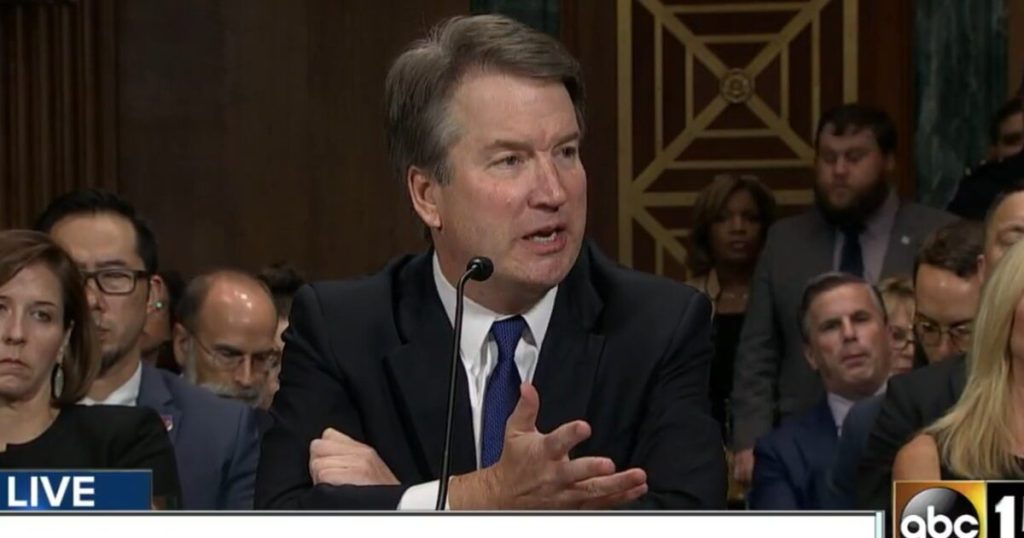
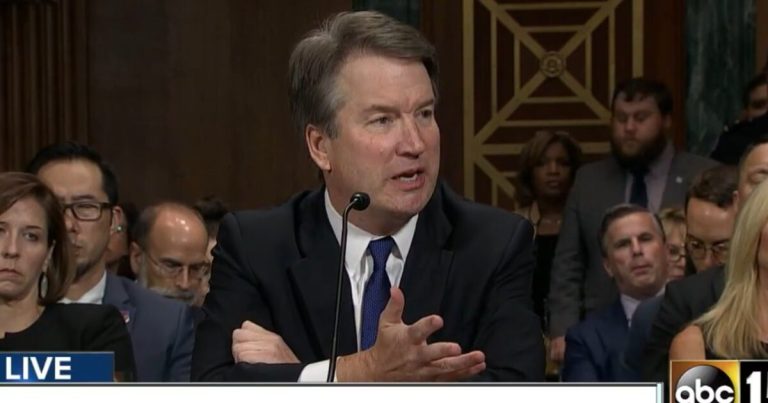
“Justice Brett Kavanaugh … wrote a brief concurring opinion saying there is a ‘fair prospect’ the Postal Service has the authority to issue the rule but added it had to be blocked because it was issued so close to the election,” according to NBC News.
Conservatives were outraged.
Congratulations SCOTUS… you just gave the green light for another election to have massive amounts of fraud through mail in ballots.
What are you doing? We the people want voter integrity.
Why is that so hard to understand?
— Sassafrass84 (@Sassafrass_84) September 15, 2026
But here’s the catch: By admitting that the USPS has the authority to issue the rule, Kavanaugh opened the door for Trump to pursue the rule again after the midterms.
“I would note though that Justice Kavanaugh threw the government a lifeline by saying that he views it as likely that they do have the statutory authority,” Jason Snead, the executive director of Honest Elections Project, explained to Fox News.
“I think there’s a fair chance that it winds back up in front of the Supreme Court eventually,” Snead added.
Just not til after the midterms.
“I do think that as a practical matter, the rule is not going to be implemented in time for the midterms,” Snead continued. “I think that’s a done deal at this point. But I do hold out hope that there will be some additional litigation over this that could allow this rule to be implementing ahead of the 2028 presidential election.”
That would be good.
“So this case is still alive and well, and I think that Kavanaugh has given us all some hope that as it progresses eventually, this rule might be allowed to go into effect hopefully in time for the 2028 election since the left has successfully killed it for 2026,” Snead added.
Also speaking with Fox News, Iowa Solicitor General Eric Wessan noted that a strong dissent by Justices Samuel Alito and Clarence Thomas also suggests the rule will eventually make a full comeback.
“I think that Justice Alito’s dissent highlights a lot of issues with the approach taken by the majority, and I would not be sure that the same result would be what the Supreme Court reaches in advance of, for example, the 2028 election,” Wessan told the network.