Russia Accused Of Helping Iran Develop Carrier-Killing Supersonic Cruise Missiles
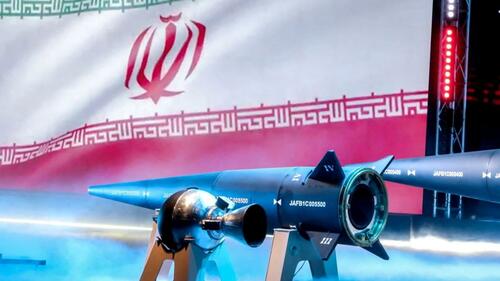
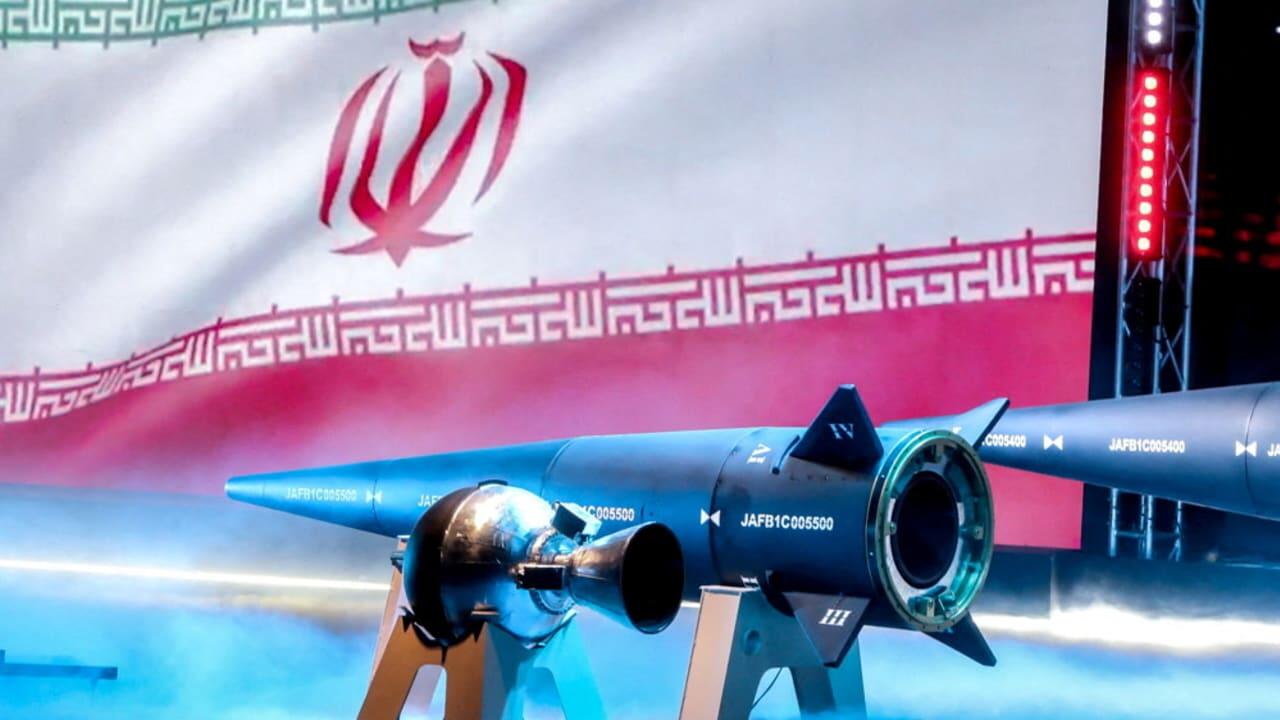
Yet another major allegation against Russia has emerged this week in the pages of the London-based Financial Times, which says that Moscow has been helping Iran develop supersonic cruise missiles, in a clandestine program that has been ongoing throughout the war with the US and Israel.
Early in the conflict, it was widely reported that advanced and ultra-fast weapons were used against Israel, which might help explain why the small Mediterranean country suffered so much damage.
The FT cited as part of its journalistic investigation internal Russian evidence it has uncovered including correspondence, travel records and military patents.
The secretive program is being described as “one of the most significant known transfers of strategic military technology from Moscow to Tehran.“
At the center of the new reporting is Russia’s state arms exporter Rosoboronexport, overseeing a project codenamed “C430L” – and also involving the US-sanctioned NPO Mashinostroyenia, a rocket design company.
Officials from both entities reportedly started frequently traveling to Iran in 2023, with the program having continued into June 2026 – though it’s unclear whether the war with the United States has paused or halted it.
The missile reportedly under development would fly at multiple times the speed of sound, and could be an ‘aircraft killer’. It should be noted there are entire Reddit threads focused on questions like: Is there any realistic way for a carrier to destroy a super-sonic “carrier killer” cruise missile?
Jim Lamson, a former CIA military analyst focused on Iran, issued a statement to FT explaining, “For the Iranians, this would give them a qualitatively new strategic weapon system that could threaten US Navy vessels.”
Another interesting insight is from Fabian Hinz, a senior analyst with Conflict Armament Research. “This is the transfer of a highly strategically sensitive military technology from Russia that the Iranians have wanted to acquire for decades,” he told the FT.
“A program like this would require political clearance from the very top in Russia,” he added.
There of course remains the looming question of whether this is all propaganda, designed to put even more Western pressure on so-called ‘rogue’ actors Moscow and Tehran. It could be, but sharing such technology would also be consistent with recent defense and economic pacts the two sides have inked. This part has been no secret. They are also already deeply involved in drone transfers.
Bessent on Iran:
Iran gets some supplies from Russia, but if we shut down the Iranian airlines, which we will, then much less coming in.
They don’t really get direct financial support from Russia. pic.twitter.com/yFssQLF71Y
— Clash Report (@clashreport) September 2, 2026
Already Russia witnessed a many years-long push to topple the Assad government in Syria, leading to a broad Russian troop withdrawal from the Levant, and certainly the Kremlin doesn’t want to see US-imposed regime change in Tehran as well.
Tyler Durden
Wed, 09/02/2026 – 19:40