
Follow CDM on Truth Social, Gab, Gettr, Telegram, Minds
Nepal had asked China for better early warning data just three months before a catastrophic flash flood killed more than 900 people along the Himalayan border — and China never delivered.
According to Reuters, Nepali and Chinese officials met in Kathmandu on May 27, 2026, to discuss disaster cooperation. Nepal’s hydrologists specifically asked for real-time data on glacier movement and water levels in Tibet’s border regions. China said it lacked the mandate to sign an agreement on the spot and asked for further discussions. Those discussions never produced a binding data-sharing deal.
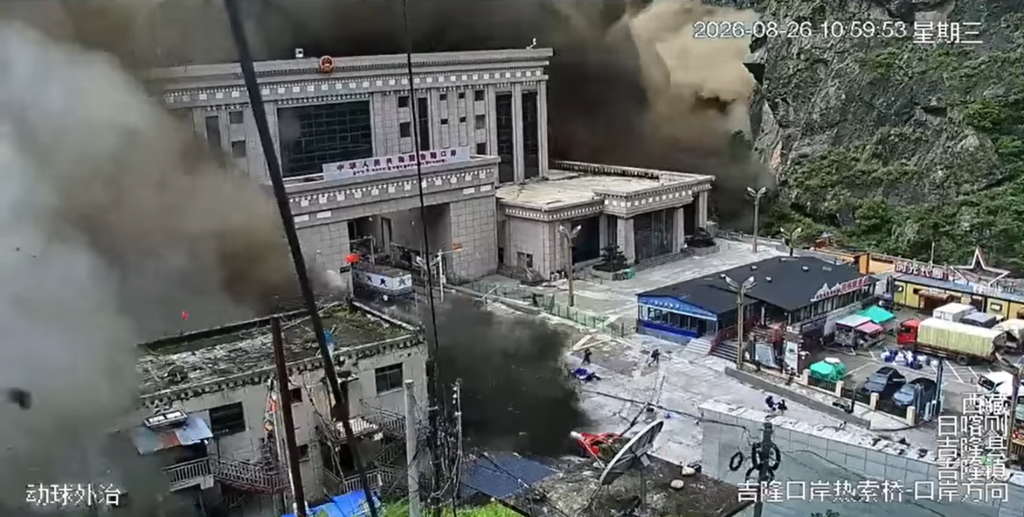
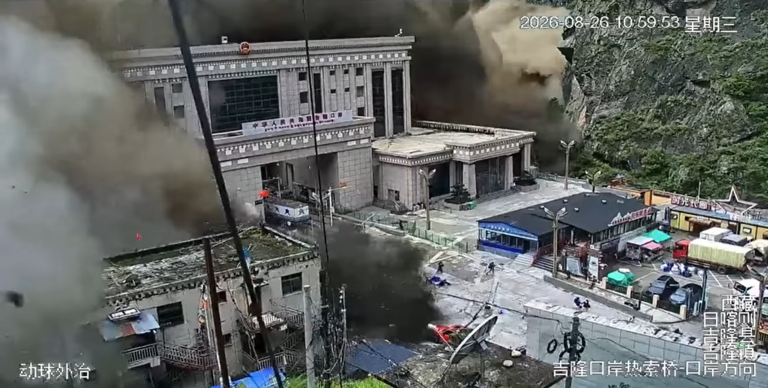
On August 26, a glacier collapse on Langtang Lirung unleashed a wall of water, mud, and rock down the Trishuli River valley. The flood killed at least 919 people, left nearly 4,800 missing, and destroyed entire communities across Nepal’s Rasuwa and Nuwakot districts. Property damage estimates are approaching $1.3 billion — roughly one-tenth of Nepal’s annual economic output.
China denied it failed to warn Nepal, calling those claims “fake news.” But Nepali hydrologist Sauhardra Joshi, who attended the May meeting, told Reuters: “What we actually wanted from them, and still want, is if there are early movements of glaciers and early movements around that area, we would want to know a bit early.”
The flood has intensified scrutiny of China’s massive dam construction program in Tibet. Days before the disaster, footage circulated on social media showing large-scale Chinese hydropower blasting and excavation near the Tibetan border region. At the center of those concerns is the Medog Hydropower Project — also known as the “Great Bend” dam — on the Yarlung Zangbo river, the upper reaches of the Brahmaputra. Chinese Premier Li Qiang broke ground on the project in July 2025. Total investment has been estimated at 1.2 trillion yuan, or approximately $168 billion USD.
Scientists from the International Centre for Integrated Mountain Development say the likely trigger was an ice-rock avalanche that temporarily dammed the Lhende Khola tributary before bursting. The cause remains officially unconfirmed, and no Chinese construction project has been directly linked to the trigger event. But experts warn that the scale of Chinese engineering in one of the world’s most seismically volatile regions creates compounding risks for hundreds of millions of people living downstream — in Nepal, India, and Bangladesh.
Nepal’s Flood Forecasting Division operates a joint early-warning monitoring system with China that was credited for years with reducing flood casualties. That system was not designed to detect sudden glacier collapses. Nepali officials say the priority now is deepening cooperation — but the May meeting exposed a structural gap: China controls the upstream data and has been slow to share it on Kathmandu’s terms.
The Trishuli River carried bodies of flood victims 240 kilometers into India. The disaster is now being watched across the region as a warning of what uncontrolled upstream development in Tibet — with no binding early-warning treaty in place — could mean the next time.
‘NO AD’ subscription for CDM! Sign up here and support real investigative journalism and help save the republic!