
Please follow us on Truth Social, X, YouTube, Minds, Telegram, Rumble, GETTR, Gab, Instagram
In the span of a single day, Syria became the center of three converging crises: Israeli airstrikes on a military airbase, a rare public rebuke from Washington, and the disclosure that Syria secretly held nuclear material from the Assad era — material linked to a reactor Israel destroyed in 2007. Taken together, they represent one of the most consequential 24-hour periods in the region in years.
Israel Strikes Abu al-Duhur — Hours After Turkish Military Was On Site
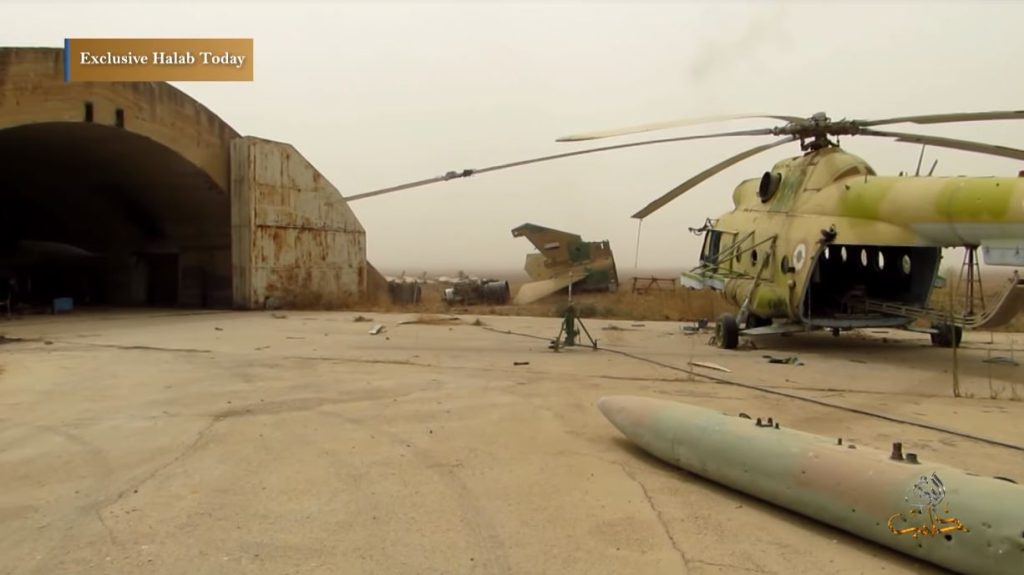
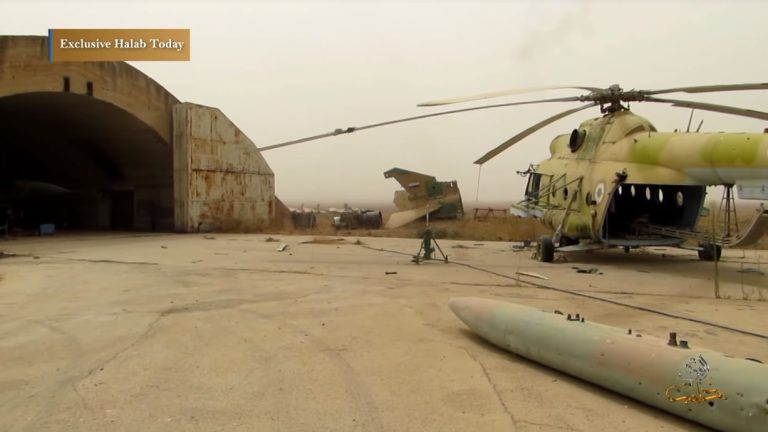
Israeli warplanes struck Abu al-Duhur Military Airbase in eastern Idlib province in the early hours of Tuesday, hitting the runway and storage facilities in multiple waves. Syrian state television, citing a military source, reported up to eight strikes causing infrastructure damage with no casualties. Al Jazeera reported four strike waves. The base is the second-largest military airport in northern Syria.
The timing was striking. According to The New Arab, a Turkish military delegation had inspected the base just hours before the attack as part of early-stage plans to rehabilitate its runway — and Turkish vehicles were reportedly still on the premises when the strikes occurred. Israel, which has never officially acknowledged its previous operations against Syrian airfields, did not claim responsibility.
Analysts at Israel’s Alma Research Center assessed that the strike pattern closely resembles previous Israeli Air Force operations against Syrian military infrastructure and suggested the runway strike was designed to temporarily disable the base and send a signal — to the al-Sharaa government and possibly to Ankara — that Israeli freedom of operation over Syria would not be constrained. Israel had previously warned Turkey against transferring advanced military capabilities, including air defense systems, to Syria. In April 2025, Israel reportedly struck the T4 airbase for the same reason.
Washington Publicly Rebukes Israel
The US response was immediate and unusually direct. US Special Envoy for Syria Tom Barrack — who also serves as Ambassador to Turkey — posted a formal rebuke on X. “We are deeply concerned that the confirmed Israeli airstrikes on Abu al-Duhur Airbase constitute an unnecessary escalation that does not advance regional stability,” Barrack wrote. “The Al-Sharaa government has neither adopted a predatory posture nor maintained proxy forces. It has, in fact, repeatedly indicated a preference for de-escalation with Israel.”
Barrack added that Washington has hosted discussions to encourage diplomatic engagement over military action and will continue to do so. “The United States continues to believe that restraint and engagement offer the more constructive course,” he stated. “We encourage all parties to prioritize logical discourse over further military incidents.”
The rebuke is notable. Washington has historically avoided public criticism of Israeli military action in Syria. Barrack’s statement reflects the Trump administration’s active investment in stabilizing Syria’s post-Assad transition and its interest in the al-Sharaa government as a counterweight to Iranian and other proxy influence.
Syria And Turkey Condemn The Strikes
Syria’s government condemned the strikes as a violation of its sovereignty and a dangerous escalation, urging the United Nations and the international community to condemn Israel’s actions. Damascus said it would defend its rights under international law.
Turkey issued an equally sharp condemnation, denouncing what it called Israel’s escalating aggression and its disregard for Syria’s sovereignty, territorial integrity, and international law. Ankara’s sensitivity was understandable: a Turkish military delegation had been on the airbase hours before the strikes hit.
Syria’s Nuclear Disclosure — The Story Beneath The Story
Separate from the airstrikes but directly relevant to the regional context, Syria publicly confirmed Tuesday that it possesses nuclear material left over from the Assad regime. The disclosure, which Syria made voluntarily to the International Atomic Energy Agency in July, revealed the existence of an undeclared site containing what IAEA Director General Rafael Grossi described, according to Reuters, as “tons of nuclear materials that could be put to bad use.”
Syria granted IAEA inspectors access to the site. Syrian Foreign Minister Asaad al-Shaibani said the material would remain in Syrian custody under IAEA safeguards and affirmed Syria’s “sovereign and legal right to a peaceful nuclear program.”
The material is linked to the Al-Kibar reactor in Deir ez-Zor province — the facility that Israel destroyed in a September 2007 airstrike. That reactor was widely believed to have been built with North Korean assistance and was assessed by Western intelligence agencies as a plutonium production facility intended to support a weapons program. Syria denied it was a nuclear site at the time. Tuesday’s disclosure is the first official Syrian acknowledgment of nuclear material connected to that program.
Grossi offered a measured but significant assessment. “We are now turning the page on the past,” he said, describing Syria as having regained its place as a fully compliant state with the IAEA.
The timing of the nuclear disclosure — on the same day Israel struck a Syrian airbase — adds a layer of complexity that neither government has directly addressed. Whether Israel had prior knowledge of the nuclear disclosure and acted preemptively, or whether the two events are coincidental, has not been established. What is clear is that Syria’s new government is simultaneously asserting nuclear transparency to the international community and sovereignty rights in the face of continued Israeli military pressure.
U.S. envoy Tom Barrack added a significant dimension to the crisis, revealing that Türkiye was not warned in advance of the Israeli strikes on Abu al-Duhur. After detecting Israeli aircraft heading toward its territory, Ankara “could have reasonably prepared its own response,” Barrack said — adding that “thankfully, calm heads were able to prevent the situation from deteriorating further.”
Barrack said the Israeli strikes reflect a perception that Türkiye might soon expand its military presence at Abu al-Duhur, “whether accurate or misplaced.” He called the episode a demonstration of the urgent need for a formal deconfliction mechanism involving Israel, Syria, and Türkiye, and said Washington is “actively working” to establish one to prevent future miscommunication and lower tensions.
The Abu al-Duhur strike also lands against a backdrop of increasingly explicit Israeli political rhetoric designating Syria and Turkey as the country’s next enemies. Israeli Cabinet Minister Miki Zohar said in May, according to Middle East Eye, that Turkey should be treated as an “enemy state” and warned that Ankara would “pay a huge price” if it went to war with Israel. “There were Iranians who thought the same thing, and look where they are now,” Zohar said. “If the Turks think the same thing, they will be in a much worse situation.”
National Security Minister Itamar Ben-Gvir has long categorized Turkish leadership as an “enemy,” while former Prime Minister Naftali Bennett declared earlier this year that Turkey was “the next Iran,” according to Brussels Signal. Israeli commentators and officials have increasingly framed Ankara — which has provided sanctuary and funding to Hamas leadership and backed Syria’s new government — as the emergent regional rival now that Iran has been substantially degraded militarily. The Abu al-Duhur strike, targeting an airbase near the Turkish border at precisely the moment Turkey is expanding its Syrian footprint, fits that pattern precisely.
On Syria specifically, Israeli Diaspora Affairs Minister Amichai Chikli was even more direct just days before the Abu al-Duhur strike, according to Enab Baladi. Describing Syrian President Ahmed al-Sharaa as “Israel’s next enemy,” Chikli called Syria “the next Gaza” and warned that war was inevitable. “Syria is Gaza on steroids, and that is the next war, with absolute certainty,” he said. “There is no avoiding it.” The Abu al-Duhur strike — hitting a Syrian military airbase days after that statement — suggests those words are already being translated into action.
‘NO AD’ subscription for CDM! Sign up here and support real investigative journalism and help save the republic!