
Please Follow us on Truth Social, X , Youtube , Minds, Telegram, Rumble, GETTR, Gab, Instagram
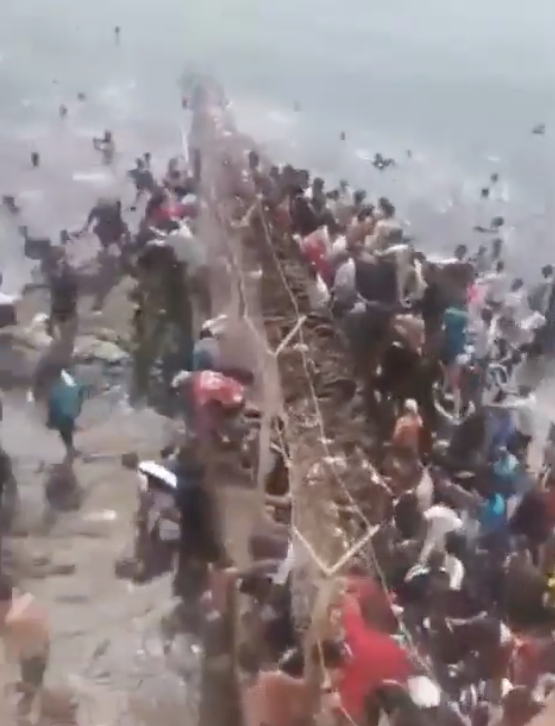
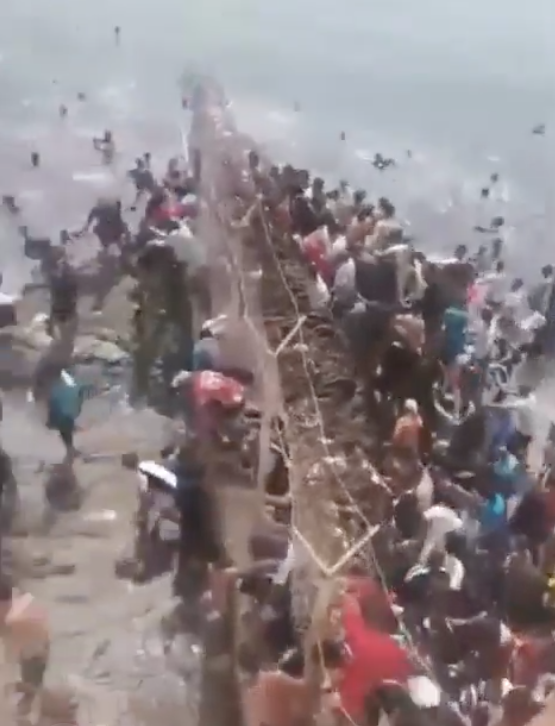
Thousands of migrants poured into Spain’s North African enclave of Ceuta this week, killing at least 18 and overwhelming local authorities. Spain’s Interior Ministry refused to declare a national emergency. And, Israel’s UN Ambassador Danny Danon posted a tweet seen by 3.6 million people rubbing Spain’s nose in it.
That sequence of events may not be coincidental.
Geopolitical analyst Bruno Maçães — a former Portuguese Secretary of State for European Affairs — noted on X that analysts at Israeli-funded think tanks had explicitly argued in April 2026 that Israel should help Morocco take over Ceuta as direct retaliation against Spain. The Ynet News analysis Maçães cited framed Morocco’s longstanding territorial claim on Ceuta as a lever Israel could pull against Madrid for its anti-Israel foreign policy.
Abraham Accords reach the Strait: how Israel can help Morocco reclaim its north
The context matters. Spain under Prime Minister Pedro Sánchez has been among Israel’s most aggressive adversaries on the world stage. Madrid unilaterally recognized a Palestinian state. Sánchez repeatedly labeled Israel’s conduct in Gaza a “genocide.” In March 2026, Spain permanently withdrew its ambassador to Israel — and simultaneously reopened its embassy in Tehran. Netanyahu barred Spain from the US-led Gaza stabilization coordination center. An Israeli legal group filed an ICC complaint against Sánchez personally over alleged dual-use weapons exports to Iran.
Morocco, for its part, has its own incentives. Rabat has long claimed sovereignty over Ceuta and Melilla, Spain’s two North African enclaves. Morocco has a documented history of using migration as a pressure lever against Madrid — most notably in May 2021, when it allowed roughly 8,000 migrants to cross into Ceuta in a single day following a diplomatic dispute. At the time, analysts concluded Rabat had effectively weaponized the border crossing.
What is different now is the Israeli dimension. If Israeli-linked think tanks were actively strategizing about helping Morocco deploy the same playbook against Sánchez — and Danon’s public post signals Israel is watching the results with satisfaction — then the question is no longer just about Spanish immigration policy. The question is whether the Ceuta migrant surge is, at least in part, a geopolitically engineered pressure campaign against a European government that chose to side with Iran.
It is also possible that American intelligence services could be involved as Spain very publicly refused to assist the Trump administration in Iran.
None of this has been established as fact. Morocco has not confirmed coordination with Israeli interests. Israel has not claimed credit. The migrants crossing into Ceuta are real people fleeing real circumstances in sub-Saharan Africa.
But the timing, the think-tank paper trail, Danon’s public gloating, and Morocco’s well-documented willingness to turn the migrant spigot on and off for political purposes all point to a question that Europe’s legacy media will not ask: Was this crisis allowed to happen — or helped along?
‘NO AD’ subscription for CDM! Sign up here and support real investigative journalism and help save the republic!