US Launches Third Round Of Strikes On Iran After IRGC Closes Hormuz, Attacks Containership
Update 8:40pm ET.
At 7:15pm ET, the US launched its third round of strikes on Iran this week after Tehran declared that it’s closing the Strait of Hormuz “until further notice”, and Iranian forces attacked a Cyprus-flagged container ship, the M/V GFS Galaxy, transiting the Strait of Hormuz.
US Central Command said that President Donald Trump ordered the fresh strikes, which targeted Iran’s ability to attack commercial vessels, after the latest Iranian attack on the Hormuz-crossing vessel. Central Command said a civilian crew member is missing and the ship was unable to continue its journey after suffering significant damage.
At 7:15 p.m. ET today, U.S. Central Command forces began launching the third round of strikes this week against Iran after Islamic Revolutionary Guard Corps forces blatantly attacked M/V GFS Galaxy, a Cyprus-flagged container ship transiting the Strait of Hormuz. A civilian crew…
— U.S. Central Command (@CENTCOM) July 11, 2026
Shortly after the Iran’s state-run media reported explosions at multiple areas along the country’s southern coasts, including the energy and petrochemical hubs of Bushehr and Asalouyeh. Blasts were also reported at the port cities of Bandar Abbas and Bandar-e Dayyer, as well as the Sirik area near the Strait of Hormuz.
BREAKING: The IRNA news agency says more than 10 explosions have been heard in the port city of Jask in the southern Hormozgan province.
🔴 LIVE updates: https://t.co/sfnZg9WSSH pic.twitter.com/FAzm8nC9ou
— Al Jazeera English (@AJEnglish) July 12, 2026
According to unconfirmed reports, the US strikes on Iran have reached all the way north to the Capital of Iran, Tehran as the US goes “full scale from bases in Kuwait and Bahrain.”
CBS Reports the Strikes on Iran have reached the Capital of Iran, Tehran
The U.S. is going FULL SCALE from the bases in Kuwait and Bahrain.
Iran’s air force is in the air and air defenses are active over TEHRAN pic.twitter.com/S0c6DWz9dE
— Ryan Rozbiani (@RyanRozbiani) July 12, 2026
“Iran made a poor choice,” Pentagon chief Pete Hegseth said on social media. “Now they pay.”
Iran made a poor choice. Now they pay. https://t.co/8m4fEfgrXv
— Pete Hegseth (@PeteHegseth) July 11, 2026
The Islamic Revolutionary Guard Corps announced the Hormuz closure, saying it won’t allow any vessels to pass through until foreign interference ends, according to state-run IRIB News. The IRGC said it halted a cargo ship after firing a warning shot because it tried to transit the strait on Saturday despite being told not to, the outlet added.
The developments cast significant doubts over the potential for talks aimed at trying to reach a more lasting peace deal. The rhetoric had been getting more heated on both sides in recent days even as the two parties had suggested there was still room for conversations.
Reports from Iran of heavy new U.S. airstrikes in a Bandar Abbas, Bushehr nuclear facility, Minab, Qeshm, and several other locations pic.twitter.com/k2zK9N5pOm
— Emily Schrader – אמילי שריידר امیلی شریدر (@emilykschrader) July 11, 2026
Earlier on Saturday, Iran’s Foreign Minister Abbas Araghchi traveled to Oman on Saturday for talks on the future of Hormuz, but there was no sign of involvement by senior US envoys. Also Earlier, Iran demanded that the US implement key commitments under a recent deal before more talks take place, rejecting Trump’s contention that negotiations could continue without a ceasefire. Tehran said Washington must meet Iran’s conditions for resolving transit issues through the Strait of Hormuz and normalizing its oil exports.
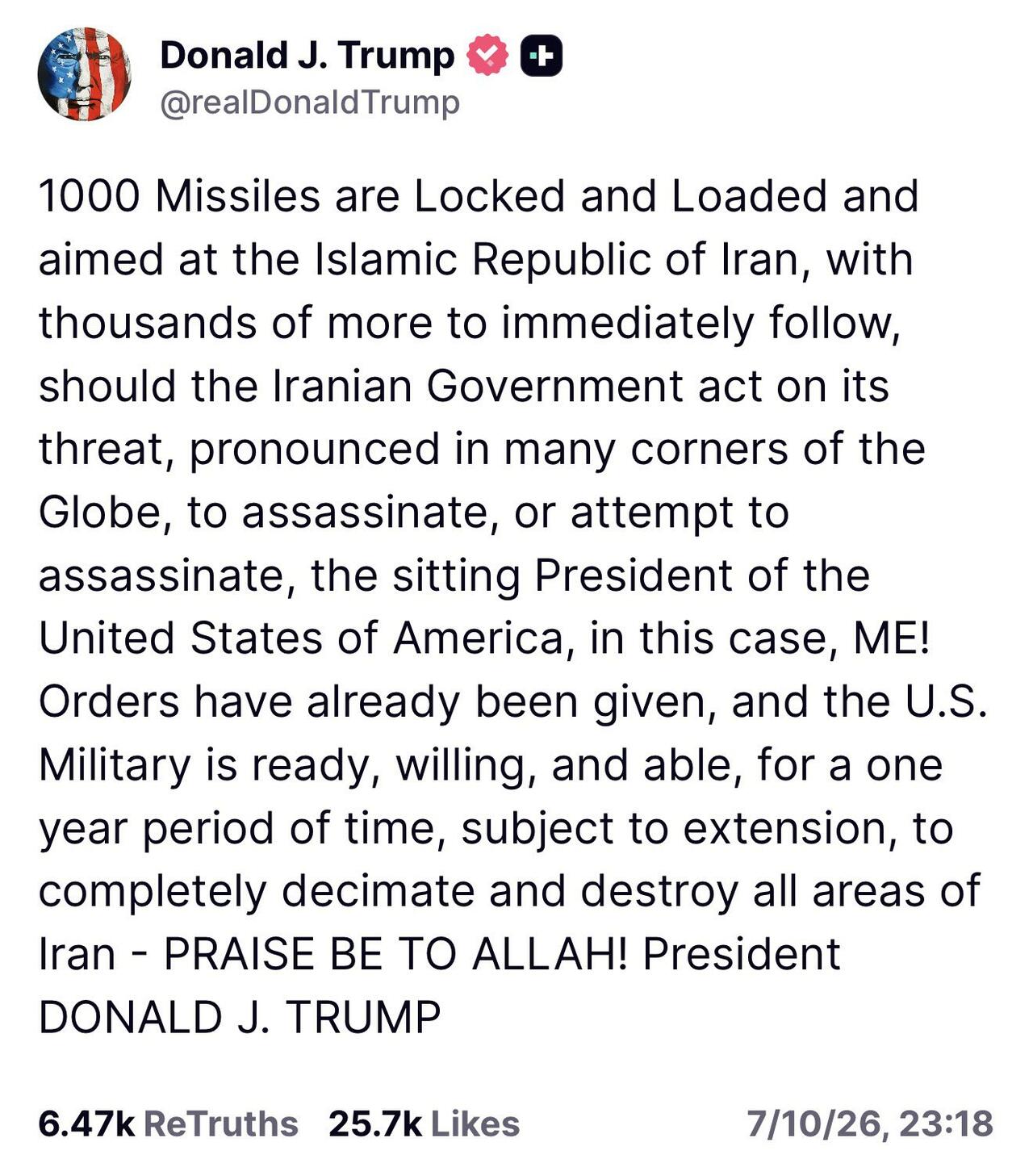
On Friday Trump threatened to shower Iran with “1000 Missiles” if it acted on a threat to kill the US leader, “in this case, ME!”
The US had also demanded that Iran publicly declare all channels of the Hormuz open to shipping and pledge not to attack civilian vessels transiting the waterway. Tehran would face consequences if it fails to deliver the public assurance, senior Trump administration officials told reporters. Those demands followed several days of US airstrikes and Iranian retaliation that sent oil prices higher this week.
The Islamic Republic is holding a three-day memorial ceremony for the late Supreme Leader Ayatollah Ali Khamenei, following a days-long funeral that drew large crowds to cities in Iran and neighboring Iraq. Khamenei was killed in an attack as the US and Israel began their war on Iran at the end of February.
His son and successor, Mojtaba Khamenei, on Saturday called for revenge for the killing of his father.
“It is our certain and undeniable duty that this revenge be carried out,” he said in a post on X.
Earlier
Iran has thrown Trump’s ultimatum and Saturday deadline right back at Washington, saying that instead it is the United States that must first meet the agreed-upon conditions in order to normalize shipping and energy transit in the Strait of Hormuz.
Fars news agency reports Saturday that Iranian leadership is demanding that the US implement “agreed-upon understandings” before any talks take place. While the White House has declared the ceasefire to be ‘over’ – it has also indicated ongoing contacts and talks with Iran via mediators. But this appears to have been reduced to simple ultimatums being shuttled between capitals by Qatari mediators. There are no actual sit-down talks on the horizon after two rounds of fresh tit-for-tat attacks broke out this past week.
The memorandum of understanding (MoU) itself is barely alive at this point, also with Iran’s ambassador to the United Nations, Amir-Saeid Iravani, separately announcing that Tehran could stop honoring the MoU if US attacks continue.
“Should the United States continue to violate its obligations under the MoU, Iran will no longer be bound to fulfil its obligations under the MoU,” Iravani told reporters at UN headquarters.
But he did make clear that Iran is still committed to the agreement “provided that the United States fully and faithfully complies with its own obligations.”
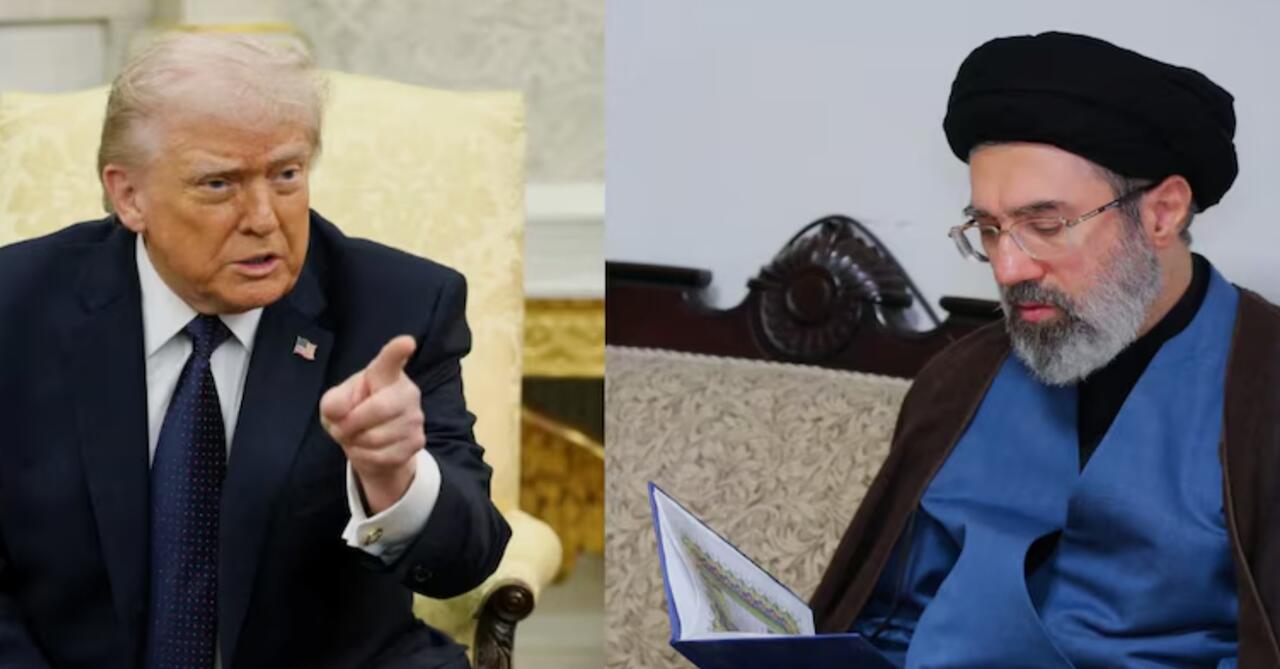
President Trump has meanwhile continued to issue his own warnings and threats. He said Friday that the US military would “completely decimate” Iran if its leaders attempted or carried out his assassination. He took it a step further in an overnight Truth Social Post, saying he has 1,000 missiles “locked and loaded” – aimed at Iran – should he be targeted by Tehran’s agents.
Strangely, the US President signed off with his puzzling “praise be to Allah!” reference – perhaps mockingly or sarcastically.
Meanwhile, Supreme Leader Mojtaba Khamenei still hasn’t been seen in public after the Feb.28 US-Israeli airstrikes took out his father, killed members of his family, and reportedly badly wounded him. Mojtaba is said to be observing a private memorial for his slain father, and made no known appearance at the week-long funeral processions and burial.
But on Saturday he did call for revenge in a rare public message. “It is our certain and undeniable duty that this revenge be carried out,” he said.
“We pledge to avenge your pure blood and the blood of all the martyrs of these two [recent] wars by taking revenge against the criminal, disgraceful murderers,” the Ayatollah also stated. “This vengeance is what our nation is demanding, and this must definitely be done.”
He issued a series of statements tinged with Shia Islamic references. His words contain repeat vows to enacting vengeance, including this not so veiled threat to kill Iran’s enemies:
The criminal, disgraceful murderers of the martyred Leader, whose names are fully documented from the highest to the lowest ranks, will carry their dream of a peaceful death in bed to the grave.
— Ayatollah Mojtaba Khamenei (@MKhamenei_ir) July 11, 2026
As for the big picture of where things stand, University of Chicago political scientist Robert Pape, who authors “The Escalation Trap,” has pointed out that that the millions of Iranians who took to the streets last week to attend the late Ayatollah’s funeral demonstrate growing nationalist resolve. He explained that this only makes further escalation more likely later this summer, as public sentiment gets hardened against the US.
“The balance of military capabilities did not change over the weekend,” Pape said. “The balance of political will shifted.“
Referencing the now unraveling ceasefire and negotiations process, Pape is predicting: “The pause appears to be another stage in the escalation process rather than the beginning of de-escalation.”
Tyler Durden
Sat, 07/11/2026 – 20:58