Trump Expands Critical Minerals Push With Army Bases
The Trump administration is taking another step to strengthen the nation’s critical minerals supply chain, announcing plans to build a series of mineral processing facilities on U.S. military bases through partnerships with private industry, according to Bloomberg.
The initiative marks the first time commercial mineral processing operations will be located on Army installations.
The U.S. Army said it has reached preliminary agreements with REalloys, Titan Mining, EnergyX, and Australia’s ioneer to develop facilities that will process rare earth elements, graphite, lithium, and boron. REalloys is slated to build a rare earth separation plant at the Tooele Army Depot in Utah, while Titan Mining will establish a graphite purification facility at either Pine Bluff Arsenal in Arkansas or Anniston Army Depot in Alabama. EnergyX will develop a lithium processing facility, and ioneer will construct a boron plant.
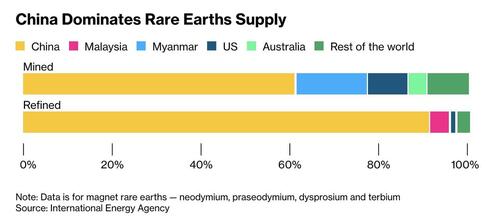
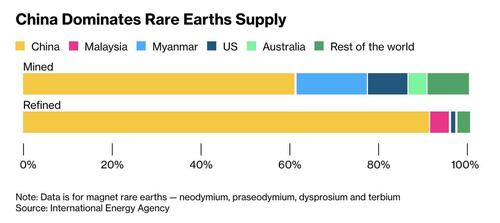
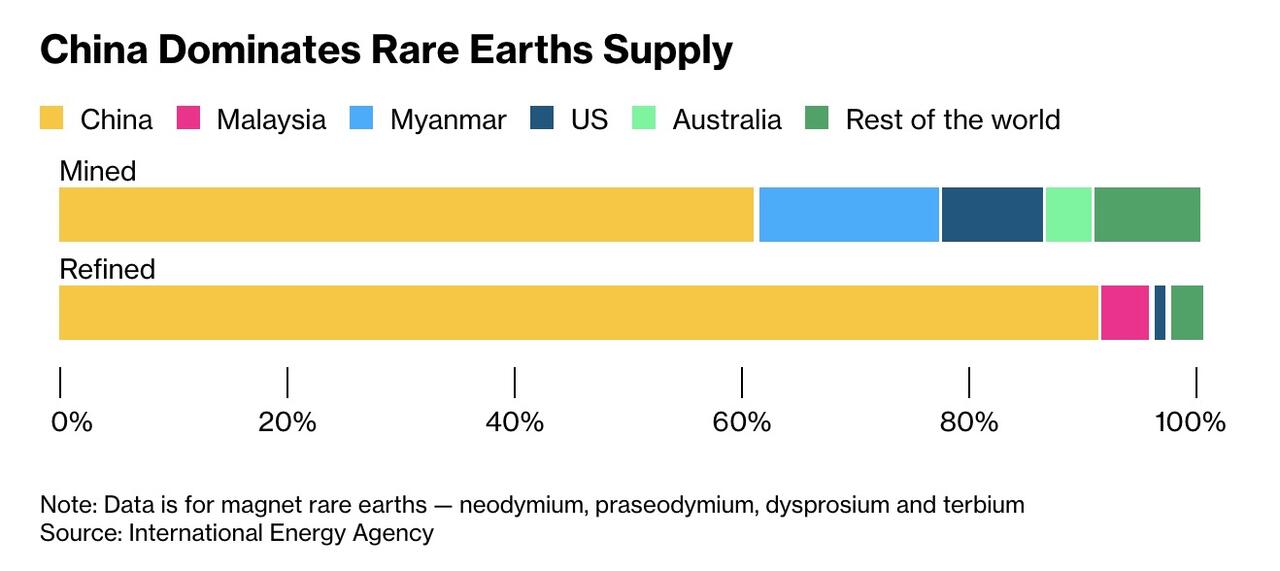
Bloomberg writes that the projects are part of a broader push by President Donald Trump to rebuild America’s domestic critical minerals industry and reduce reliance on overseas suppliers, particularly China, which dominates much of the global processing market. Critical minerals are essential for military equipment, electric vehicles, semiconductors, renewable energy systems, and a wide range of consumer electronics.
Unlike traditional government subsidy programs, the Army said these agreements require the companies to pay for and carry out infrastructure improvements at the military bases in exchange for operating rights. The Pentagon expects the facilities to provide the military with more reliable access to strategically important materials while expanding U.S. processing capacity. Construction could begin as early as 2027, with production expected to come online in 2028.
The announcement follows a series of recent moves by the administration to boost domestic mineral production through loans, investments, and strategic partnerships. Those efforts have accelerated as geopolitical tensions with China continue to reshape global supply chains, with both countries taking steps to secure access to the raw materials increasingly viewed as essential to national security and advanced manufacturing.
Tyler Durden
Fri, 06/26/2026 – 22:10