Qualcomm To Design China-Specific Data Center Chip In Compliance With US Export Curbs
Qualcomm unveiled its data center chip lineup on Wednesday, becoming the latest chipmaker to enter the AI processor race in an attempt to challenge market leader Nvidia. CEO Cristiano Amon told Nikkei Asia the company is eyeing the China market for its data center products, including designing chips specifically for Chinese customers that are in compliance with U.S. export controls.
The mobile chip giant is revamping the design of data center processors, which is traditionally powered by graphic processing units (GPUs) and high bandwidth memory (HBM) chips.
Amon teased Dragonfly – a dedicated brand for AI data center solutions designed to break Nvidia’s grip on AI infrastructure – at the Computex trade show in Taipei early this month.
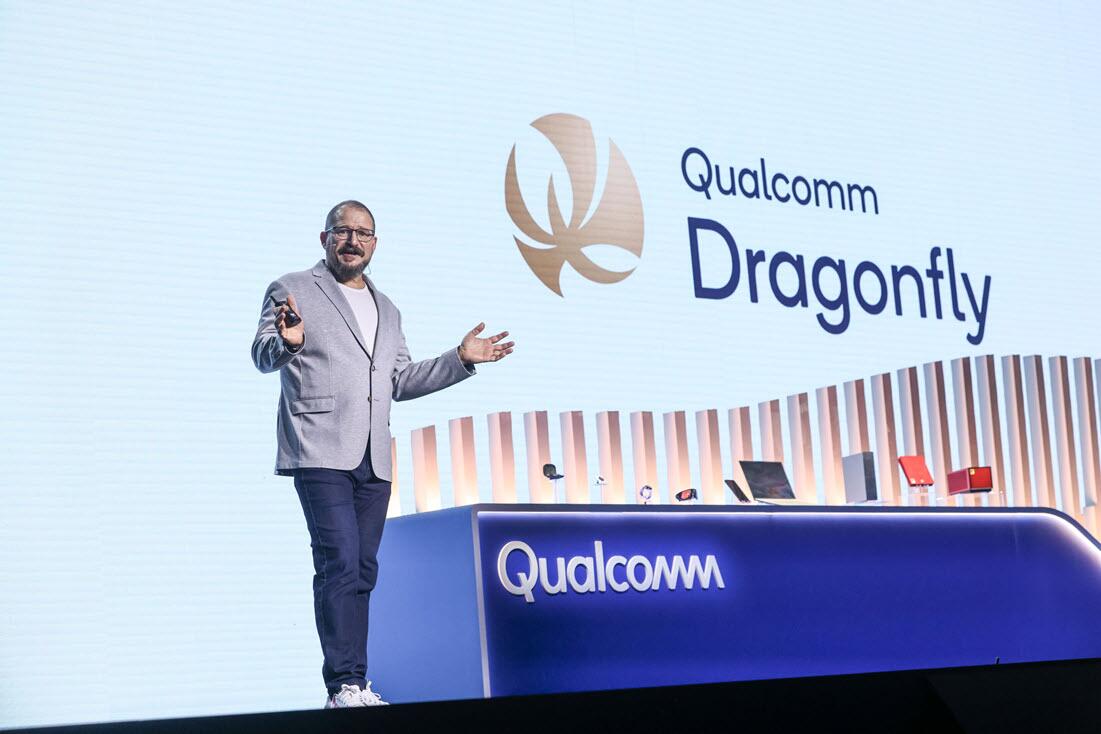
The company unveiled more details about Dragonfly at its investor day in New York on Wednesday. Dragonfly encompasses four product lines: AI accelerators, data center CPUs, custom silicons and connectivity chips. Amon said Qualcomm is working to bring all four data center product lines to China, including customized AI accelerators for the Chinese market that will comply with US export controls limiting advanced AI chips sales above certain threshold.
“We have a big business in China, and I think as we started to diversify the company, our partnership with China and our China customers also expanded,” said Amon, adding the relationship with Chinese smartphone makers and auto companies is also going to be “a strength that we’re going to bring on the data center side. ” However, “there are very clear guidelines about how you can ship products to China, and we have versions of all of our products that comply with those guidelines, ” he said. “We are engaged in conversations and are positively optimistic about the reaction we’re getting.”
Qualcomm’s data center processor features a design that differs from AI racks deployed in data centers. Dubbed high bandwidth compute (HBC), Qualcomm said the near-memory compute design will make its data center chips deliver six times the bandwidth per watt versus HBM-based solutions.
The data center compute market is dominated by AI racks powered by Nvidia’s GPUs and HBM chips that are produced by South Korean companies SK Hynix and Samsung. Both Samsung and SK Hynix are also working on near-memory and on-memory compute as memory capacity becomes the latest AI deployment bottleneck.
Amon said the HBC will be different from the processing-in-memory (PIM) architecture other memory chipmakers are developing.
“This is a very unique technology that allows you to develop 3D-stacking of the DRAM alongside logic that is built for the accelerator,” he said, adding that HBC significantly increases available memory, reduces bandwidth bottleneck and improves compute efficiency.
As the global memory chip crunch continues, Amon said they have secured enough memory for its data center products in fiscal year 2027 and the new HBC technology will also help ease the memory chip shortage.
“This technology is starting to get interest, we now have memory vendors, small and large ones, now engaging with Qualcomm and want to partner with Qualcomm on HBC,” the CEO said.
In addition to better compute performance, Qualcomm said the HBC architecture also uses less energy and costs less to own. In video messages, Microsoft and Meta CEOs said the two companies’ data centers will be early adopters of Qualcomm’s data center chips including HBC and CPUs.
Qualcomm said the first HBC chip will ship with its AI250 data center rack in fiscal year 2027. The company told investors Wednesday the new data center products are expected to bring in $300 million in revenue in the current fiscal year, and $5 billion in fiscal year 2027, which starts in October. Qualcomm estimates the total addressable market for data center chips will be more than $1 trillion by 2029 and the company will take a more-than-5% share of that market.
At the Wednesday keynote, Amon said it is “never too late” for Qualcomm to enter the data center chip business because “this is a market that moves very, very fast. So, if you have technology leadership, there’s always room for you.”
In addition to AI accelerators powered by the new HBC design, Qualcomm also unveiled a CPU designed for data centers and AI inference, announcing the company has won “two major hyperscaler deals” for custom-designed data center chips that will bring in “meaningful revenue” by the end of the year.
Amon also touted a close partnership with the contract chipmaking giant TSMC that will give it a leg up in the data center chip race.
“As soon as TSMC finishes the mask, we go to production, and we go to production at scale. That’s the maturity of our manufacturing capabilities,” said Amon.
It is yet to be seen if Qualcomm can convince investors and customers alike to be a competitive alternative to Nvidia products.
“Current data center revenues remain de minimis and reliant on Qualcomm proving they are able to bring strong CPU [and] NPU performance from consumer devices to more complex data center workloads,” Vivek Arya, analyst at Bank of America, said in a note Tuesday, adding that Qualcomm is entering a “fast-growing but hyper competitive AI market full of large incumbents.”
NPU refers to neural processing units, hardware designed to perform AI computing tasks.
Ahead of an investor meeting Wednesday, Qualcomm announced the acquisition of chip software startup Modular Inc. in an all-stock deal valued at nearly $4 billion that will help Qualcomm compete with Nvidia’s CUDA ecosystem.
In addition to its advanced AI processors, Nvidia’s lead in the data center market is solidified by the CUDA computing platform that makes its AI chips more efficient and easier to program.
On Wednesday, Nvidia CEO Jensen Huang told the annual shareholders meeting that while his company’s systems “may not be the cheapest to produce, to purchase, but Nvidia generates the lowest cost tokens, the highest token throughput and the most revenues. “
Bloomberg reported last month that Qualcomm had struck a deal with ByteDance to supply the Chinese tech giant with custom AI data center chips. The deal is structured to fall within existing U.S. export control thresholds, a design choice that signals Qualcomm’s intent to capture Chinese AI demand without irritating the White House.
The U.S. chip giant will likely face similar regulatory scrutiny as Nvidia and others over China exports.
The Trump administration unveiled new guidelines for the export of powerful AI chips to Chinese entities outside of China in June. The U.S. Department of Commerce said it will implement license requirements for Chinese companies headquartered in China, even if they are physically located outside the country.
China accounted for 46% of Qualcomm’s revenue in 2025, mostly from smartphone chips. Qualcomm’s CEO was part of a high-profile business delegation that accompanied Trump when he visited President Xi Jinping in China this May. Amon said Wednesday the company’s presence at the leaders summit is an example of what a “win-win” relationship between the two countries looks like.
Amon said the epicenter of AI agent development is in China, with new agentic use cases emerging across platforms from smartphones and glasses to cars.
“Actually, when I talk about China, I am in a situation right now that I don’t know who the mobile customers are anymore, because there are OEMs, but every single AI foundational model company building agents also are customers,” he said.
Meanwhile, Qualcomm announced a deal with Saudi Arabian AI company Humain, which has committed to deploying 200 megawatts of Qualcomm accelerator racks, beginning this year.
The world’s leading mobile chip developer, Qualcomm, has long been a leader in premium chips for flagship smartphones such as Samsung Electronics and Xiaomi, and has gradually expanded into the PC market. It announced its first chip for budget PCs at Computex in Taipei earlier this month.
Qualcomm still generates most of its revenue from mobile chips. For the latest quarter, its handset chip business reported a 13% year-on-year revenue drop to $6 billion, which accounted for 57% of its revenue in the January to March quarter. Its Internet of Things business, which includes PC chips, recorded a 9% sales jump on the year to $1.7 billion. By fiscal year 2029, however, the company expects handsets to account for only a third of revenue with data center products on par with smartphone chips.
Tyler Durden
Thu, 06/25/2026 – 18:00