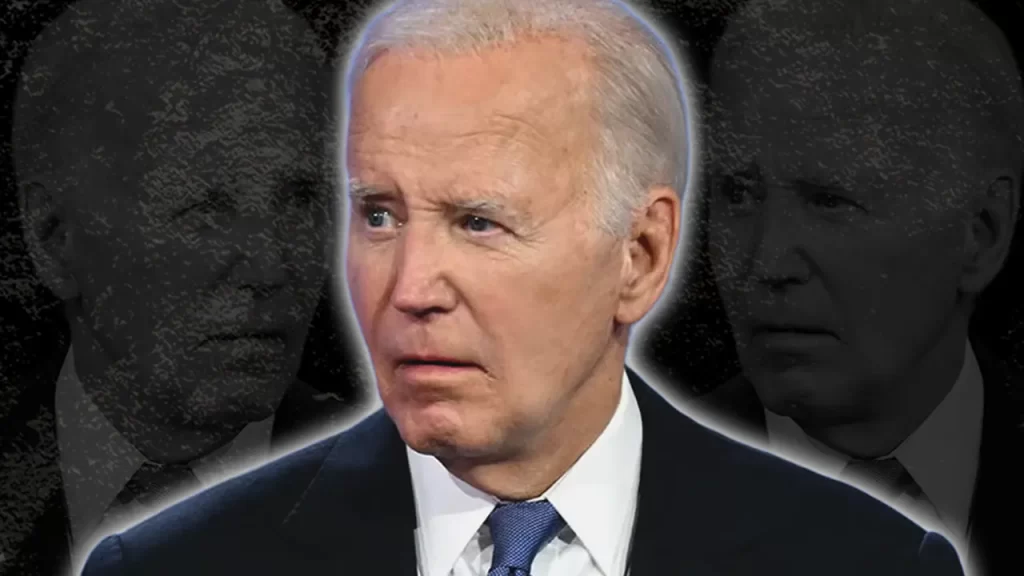
The American people are not children. They do not need to be protected from the truth by lawyers, handlers, bureaucrats, or partisan media figures.

Please Follow us on Truth Social, X , Youtube , Minds, Telegram, Rumble, GETTR, Gab, Instagram
A federal judge in Washington has now done what the political class, the bureaucratic permanent government, and the Biden damage control machine hoped would never happen. United States District Judge Dabney L. Friedrich has denied Joseph R. Biden Jr.’s effort to block the Department of Justice from releasing redacted audio recordings and transcripts of Biden’s interviews with ghostwriter Mark Zwonitzer, the very interviews relied upon by Special Counsel Robert Hur in his investigation of Biden’s mishandling of classified documents.
This is more than a procedural ruling in a Freedom of Information Act (FOIA) case. It is a major victory for transparency, accountability, and the principle that the American people have a right to know who was capable of exercising the powers of the presidency and how key decisions were made. The case, brought by the Heritage Foundation and Mike Howell, sought records from Hur’s investigation, including the Zwonitzer materials specifically cited in Hur’s report. Hur was appointed in January 2023 to investigate classified documents discovered at the Penn Biden Center and Biden’s Wilmington, Delaware residence. Although Hur declined to prosecute Biden, he concluded that it would be difficult to convince a jury that an elderly former president with significant memory problems possessed the criminal intent necessary for conviction.
Hur’s report described recorded conversations in which Biden struggled to remember dates, events, and details from his own life. Those findings were explosive because they contradicted years of assurances that Biden remained vigorous, alert, and fully capable of performing the duties of the presidency. Americans were repeatedly told not to believe what they saw during public appearances when Biden appeared confused, forgetful, or unable to complete basic remarks without extensive assistance.
Now the courts are moving us closer to the underlying evidence. Biden intervened in the FOIA lawsuit and sought a preliminary injunction to stop the release. His attorneys argued that the recordings involved deeply personal conversations connected to the writing of “Promise Me, Dad” his memoir about the death of his son Beau and his decision not to run for president in 2016. No reasonable person dismisses the pain of losing a child. Yet these recordings were not merely private family conversations. They became evidence in a Special Counsel investigation involving classified documents, prosecutorial discretion, and the mental state of a man who later occupied the most powerful office in the world.
Judge Friedrich’s opinion makes that distinction clear. The court found that the Department of Justice had already made extensive redactions to protect family matters, health information, deaths, illnesses, and references to private individuals. What remains largely concerns subjects already discussed publicly through the Hur Report, congressional testimony, and Biden’s own writings.
This was not a judicial order to expose private grief. It was a rejection of Biden’s attempt to use privacy as a blanket shield against public scrutiny of government records. The ruling is especially important because the court recognized the extraordinary public interest involved. Hur’s investigation centered on a sitting president, classified documents, and a prosecutorial decision that carried enormous political and constitutional consequences. The public has a right to evaluate the evidence Hur relied upon when he chose not to prosecute Biden while simultaneously expressing serious concerns about his memory and mental faculties.
Biden’s legal team argued that the Justice Department’s decision to release the materials was arbitrary and politically motivated. Judge Friedrich rejected that argument, finding that the Department had adequately explained its decision and that Biden was unlikely to prevail on the merits. Most importantly, the court concluded that the balance of equities and the public interest favored disclosure.
This is precisely how the Freedom of Information Act is supposed to work. FOIA was enacted to pierce government secrecy and allow citizens to understand what their government has done in their name. Records matter. Evidence matters. Audio matters because tone, hesitation, confusion, pace, and comprehension cannot always be captured by a transcript. That is why these tapes matter more than Biden’s defenders would like to admit. A transcript can be summarized and interpreted. A recording carries the pauses, the uncertainty, the strain, and the cadence of a person speaking in real time. If Hur relied on how Biden sounded and behaved during these interviews, then the American people are entitled to hear enough of that evidence to determine whether Hur’s conclusions were fair and accurate.
The Heritage Foundation and Mike Howell deserve credit for pursuing this fight when many of the self-appointed guardians of transparency showed little interest in the underlying facts. Their victory is not merely a conservative victory. It is an American victory because government records ultimately belong to the people.
The autopen controversy now hangs over this matter as well. If Biden’s decline was visible years before it became publicly undeniable, then Americans deserve answers about who exercised authority when he could not. They deserve to know who made decisions, who controlled access, who approved policy, and who wielded power behind the scenes while presenting the image of a fully functioning president. This is not a trivial matter. It goes to the constitutional heart of self-government.
Biden’s defenders will argue that examining these questions is unfair to an aging man. That argument might carry greater force if Biden had been a private citizen. It carries far less weight when applied to the President of the United States. Compassion for age and illness should never become an excuse for concealing facts that voters have a right to know.
Judge Friedrich’s ruling does not order the release of everything, nor does it eliminate appropriate redactions. What it does establish is a simple but essential principle. When records illuminate the conduct of government, the public interest can outweigh the privacy claims of even the most powerful officials. The Biden tapes may ultimately prove historically significant, not because they resemble the Nixon tapes, but because they may reveal the hidden reality behind a presidency that many Americans increasingly believe was presented under false pretenses. The question is no longer whether Biden experienced memory problems. Hur placed that issue firmly into the public record. The question now is how early those problems became apparent, how serious they were, who knew about them, and what efforts were made to conceal them from the voters.
The American people are not children. They do not need to be protected from the truth by lawyers, handlers, bureaucrats, or partisan media figures. They need the facts. They need the records. They need the tapes. Judge Friedrich’s ruling is a welcome step toward restoring the simple but indispensable principle that in a free country, the government does not own the truth. The people do.
‘NO AD’ subscription for CDM! Sign up here and support real investigative journalism and help save the republic!