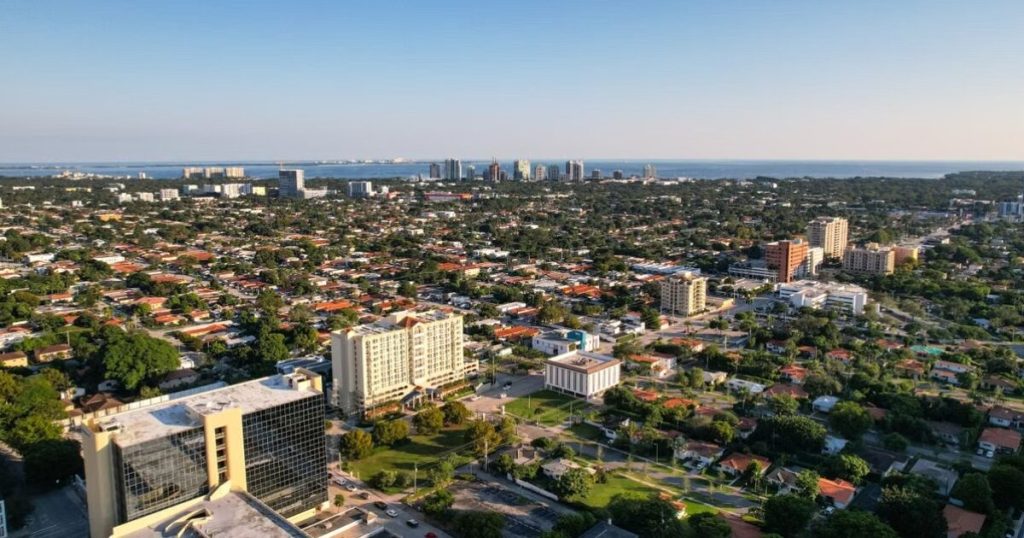

A new post-retirement migration pattern has emerged, showing that those who moved to Florida are now moving out of the state and heading back north.
These “halfbacks,” as they’re being called, are deciding to move “halfway back north” and settle in states “like South Carolina, North Carolina, Georgia, or Tennessee,” according to Realtor.com.
Citing data from HireAHelper, Realtor.com reported that of the over 2.1 million retirees aged 65 and older who moved in 2025, a whopping 40,000 of them moved to Florida — which is no surprise.
FLORIDA IS WINNING BIG.
The flood of high-earners and big money into Florida shows no signs of slowing down, fueling explosive growth and turning South Florida into an economic juggernaut. pic.twitter.com/vEFRwHPPvr
— Andrew Alvarez (@theOGalv) June 23, 2026
The shocking part is that “nearly as many people 65 and up also left Florida altogether,” leaving the state’s net-gain at just 815 retirees.
As a result, South Carolina has now become the state with the most net gain in retirees, followed by Texas, North Carolina, and Tennessee.
“This idea of halfbacks — they are, in a sense, still coming from places like New England, they just stopped off in Florida first, and then moved to South Carolina,” research economist Joey Von Nessen said.
But why are retirees fleeing the state of low taxes and Republican rule?
“I would say about 40 percent of the retirees I work with are from Florida,” Lauren Reinhardt, a residential broker based out of N.C., told Realtor.com.
“Florida wasn’t what they were promised,” she added. “The heat has become unbearable, the larger cities feel overdeveloped with infrastructure that hasn’t kept up, and the cost of living—particularly insurance and HOA fees—have started to take a hit on their retirement budgets.”
She wasn’t wrong.
A Recent Florida Atlantic University survey found that half of the respondents would consider leaving the state over rising costs.
“I do think that Florida’s housing market is very scary for lots of people,” Julia Donovan, a broker based out of South Carolina, said. “When someone owns a house, they’re going to start looking at its continued cost, and your mortgage is just part of it. Your property tax, your insurance, and HOA are another huge factor. You always have to pay those—the number changes, but the fact that you have to pay doesn’t change.”
Even in good ol’ Florida, which boasts no state income taxes.

Realtor.com notes via 1-800-Insurance that, thanks to rapid increases in insurance rates, “Florida homeowners may pay nearly five times the national average of $2,110 for insurance.”
But it’s not necessarily the fault of Republican policymaking.
“A combination of consistent hurricanes, a massive amount of fraud and litigation, and a loss of insurance carriers led to Florida’s insurance crisis,” according to Realtor. “The state has tried to stem the rising tide of these costs, but it may have been too little, too late for some residents.”
Donovan kept it even simpler.
“A bad storm means insurance increases,” she bluntly explained. “And even after the increase, you’re still in the path of the storms. It’s just a vicious cycle, and I think a lot of people moving out of Florida have just had it.”
Now compare this to South Carolina, which has better insurance rates and fewer storms.
“If you’re looking at South Carolina, which has fewer extreme weather events, and as a result, insurance costs and other housing-related costs aren’t as high, then that’s naturally going to change the location decisions of many people,” Von Nessen said.
Even North Carolina looks nice in comparison.
“North Carolina offers four seasons, and this is one of the factors I hear most often,” Reinhardt noted. “For people who gave up fall foliage and cool falls when they moved South, getting that back is a determining factor when choosing where to relocate.”
“Another major draw of Western North Carolina is the opportunity to build. Many Florida buyers are able to sell their existing home and reinvest those proceeds into a custom home here. There are homesites with wooded privacy and mountain views which are impossible to find or prohibitively expensive in many parts of Florida,” she added.