
Please Follow us on Truth Social, X , Youtube , Minds, Telegram, Rumble, GETTR, Gab
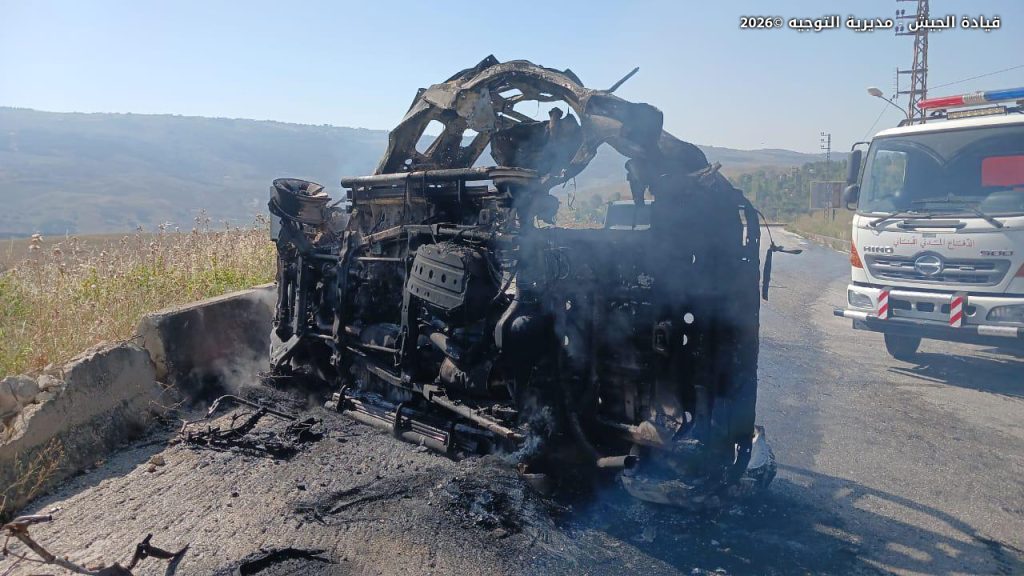
Beirut, Lebanon — An Israeli airstrike in southern Lebanon on Saturday killed nine people, including three Lebanese Army personnel, according to Lebanese officials and state media. The incident occurred days after Israel and Hezbollah agreed to a new ceasefire.
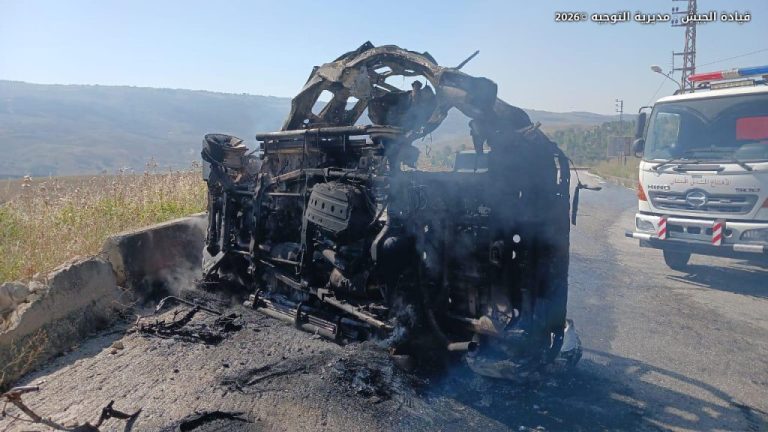
The strike targeted a vehicle on the road linking the city of Nabatiyeh with the town of Marjayoun, killing a brigadier general, a captain, and a soldier, the Lebanese Army said. It described the attack as an “aggressive and barbaric raid.”
The Israel Defense Forces (IDF) confirmed it struck the vehicle. The IDF said it has launched an investigation into the incident.
According to the IDF statement, the vehicle was moving suspiciously toward Israeli forces near the village of Kfar Tibnit (also referred to as Tebnit) in what the military called an active combat zone. Israeli troops declared they had received concrete indications that Hezbollah militants intended to direct fire at them from the same area.
The IDF stressed that movement in the combat zone requires prior coordination with Israeli forces and reiterated that it “operates against the Hezbollah terrorist organization and not against the Lebanese army.”
Lebanese officials reported the broader toll at nine dead. The strike marks a significant escalation involving the Lebanese national army, which has largely stayed on the sidelines of the Israel-Hezbollah conflict.
In a statement, the Lebanese Armed Forces condemned the continued Israeli actions, saying they “only strengthen our resolve, faith and determination.” The army accused Israel of undermining efforts to achieve a comprehensive ceasefire and full Israeli withdrawal from occupied Lebanese territories.
Ceasefire Tensions and Broader Context
The deaths come amid ongoing fragility following the recent ceasefire agreement. The United States has been pressing the Lebanese government and military to disarm Hezbollah, the powerful Iran-backed Shia group that remains better armed than the national army in many assessments.
Analysts note that U.S. restrictions on weaponry supplied to the Lebanese military—due to concerns over potential use against Israel—have contributed to the army’s relative weakness compared to Hezbollah. The killing of Lebanese officers could further complicate efforts to assert state control over the group, especially given Lebanon’s history of deep political divisions and past civil conflict.
Political Fallout in Lebanon
Lebanese President Joseph Aoun drew criticism this week after remarks to CNN in which he blamed Iran and Hezbollah for turning Lebanon into a “bargaining chip” with the West. Many in Lebanon have faulted him for focusing criticism on Hezbollah rather than Israel.
Iranian Foreign Minister Abbas Araghchi responded sharply on X (formerly Twitter), writing sarcastically: “One would think it’s Iran that has occupied a fifth of Lebanon, displaced a quarter of Lebanese and is bombing his country on daily basis.” He added, “Had Lebanon been a bargaining chip for Iran, we’d have a deal long ago. Save Lebanon from your real foe, Mr. President.”
The incident highlights the challenges facing Lebanon’s fragile political balance as international pressure mounts to weaken Hezbollah while Israeli operations continue in the south.
‘NO AD’ subscription for CDM! Sign up here and support real investigative journalism and help save the republic!