NOAA OKs First Deep-Sea Mining Plan For Critical Minerals In Pacific Ocean
Authored by Jill McLaughlin via The Epoch Times,
The Trump administration approved on May 1 its first deep-sea critical minerals exploration application, submitted by North Carolina-based deep-sea mining explorer The Metals Company USA (TMC).
The company expects to find millions of tons of nickel, copper, cobalt, and manganese on the sea floor needed in the United States for electric vehicle batteries, infrastructure, and national defense systems.
TMC applied for the 10-year license last year after President Donald Trump ordered the National Oceanic and Atmospheric Administration (NOAA) to expedite the process of reviewing and issuing the deep-sea permits to “unleash America’s offshore critical minerals and resources.”
“NOAA has determined that this application is fully compliant with the applicable application information requirements,” the agency reported May 1.
The application now moves into the certification stage and will undergo an environmental review process and be open for public comment before a license and permit are issued. TMC USA expects the process to conclude sometime in the first three months of 2027.
TMC is a subsidiary of a larger Canadian exploration firm with the same name that holds rights to what it describes as the world’s largest undeveloped resource of battery-grade nickel, copper, cobalt, and manganese.
“This determination marks an important step forward in NOAA’s transparent, rules-based process, and brings us ever closer to providing the U.S. with a new, abundant and lower-impact source of critical metals,” parent company TMC CEO Gerard Barron said in a statement.
“It reflects the sheer scale of scientific, environmental, and engineering effort and expertise that have been brought to bear on this project over the last 15 years, which provides us with sufficient information to move efficiently and responsibly into commercial operations under NOAA’s oversight,” Barron said.
NOAA determined that the application for an exploration license and commercial recovery permit under the Deep Seabed Hard Mineral Resources Act was in full compliance.
The Metals Company plans to conduct seabed mining exploration within the area beyond national jurisdiction known as the Clarion-Clipperton Zone, which stretches about 4,500 miles between Hawaii and Mexico in the North Pacific Ocean.
The zone is considered “common heritage of mankind” and is administered by the International Seabed Authority (ISA), a United Nations (U.N.) body that manages seabed resources.
The ISA, however, has not yet finalized global rules for the zone, and multiple countries view action in the absence of such rules as a violation of the U.N. Convention on the Law of the Sea.
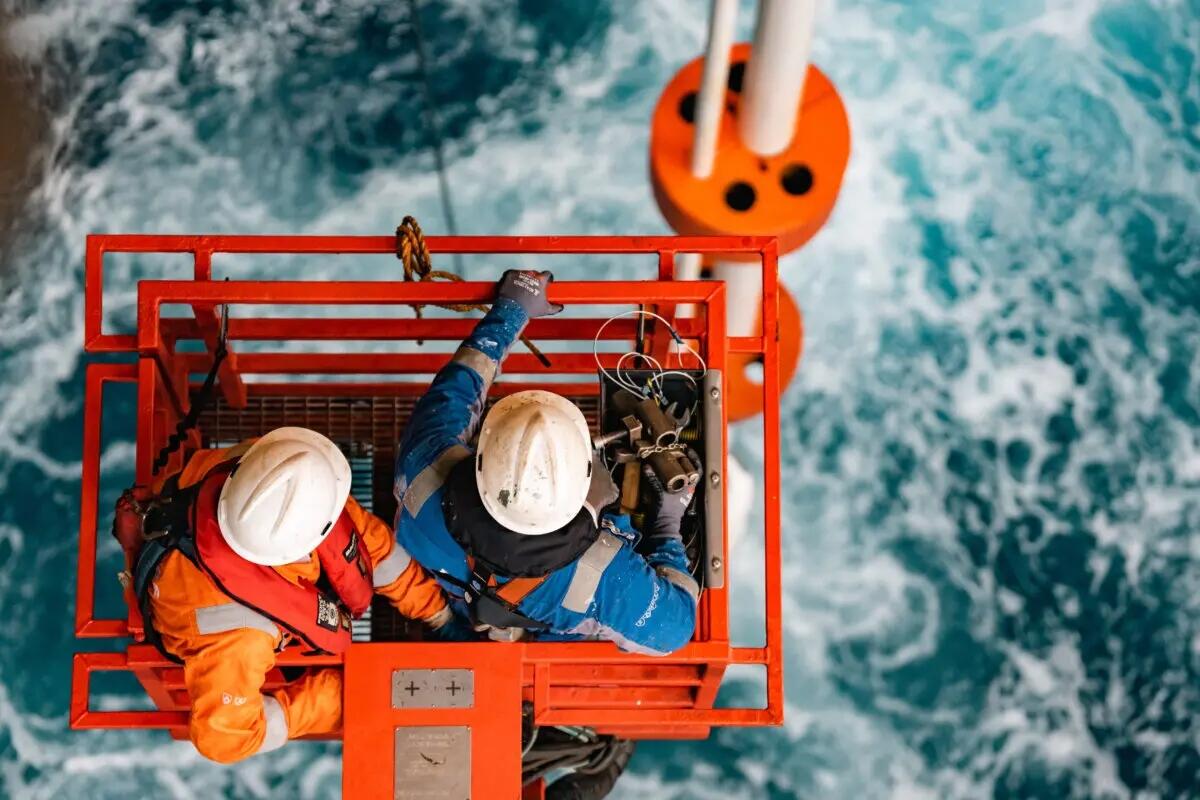
Engineers aboard Hidden Gem inspect the top of the 4-kilometer-long riser system, which is used to transport collected nodules to the surface on compressed air. The Metals Company
The United States pushed forward this year to issue licenses under its own laws instead of waiting for the ISA, as part of a larger effort to amass a domestic supply of critical minerals for national security after China began to restrict global supplies.
TMC’s application and recovery permit covers a total area of 26,000 square miles in the Clarion-Clipperton Zone. The exploration areas are even larger, covering nearly 77,220 square miles.
The company believes the exploration areas contain an estimated 17 million tons of nickel, more than 14 million tons of copper, 2.2 million tons of cobalt, and 380 million tons of manganese.
The application received nearly 300 public comments, with some opposing and some supporting the company’s plans.
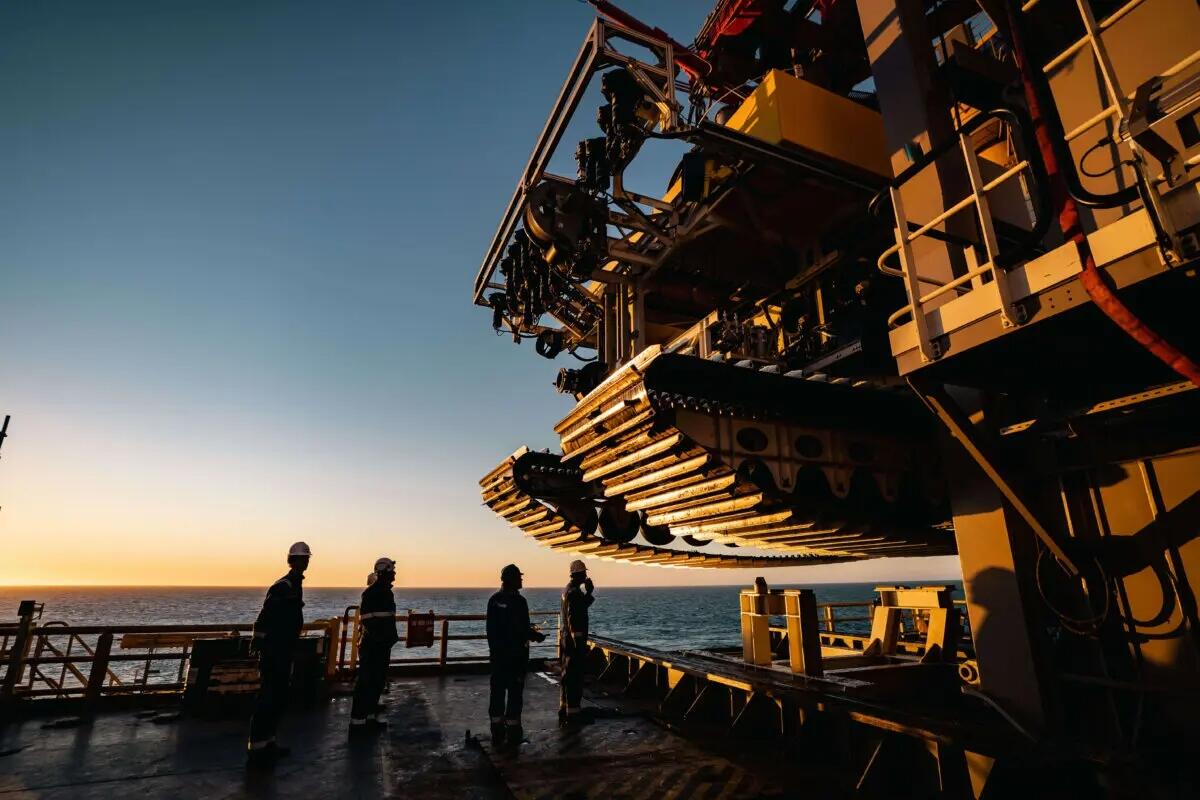
The Allseas-designed collector vehicle gently lifts the loose-lying polymetallic nodules from the seafloor at depths of 4 kilometers using water jets. The Metals Company
“I oppose deep-sea mining,” said Suzanne Reid, an individual from Florida. “We should not destroy the ocean’s natural oxygen-producing nodules. Please choose a moratorium to protect our future.”
Commenter James Selke said he thought the project was needed.
“While this project may introduce unavoidable impacts to the deep seabed, the relative area of this license (and the CCZ generally) is very small and isolated in comparison to the vastness of the World’s oceans,” Selke wrote. “The United States should deeply consider the national security impacts of such a project, holistically, rather than simply evaluating the unavoidable, yet mitigatable, impacts as the determining factor.”
NOAA accelerated permitting for deep-sea mining companies this year using a 1980s policy that allows U.S. citizens to explore the seabed to mine critical minerals until the international regulatory regime is in place.
The United States controls seabed mineral resources in the Exclusive Economic Zone and its Extended Continental Shelf, covering over 4 million square miles of submerged land around the Pacific islands, Alaska, and the Atlantic coast.
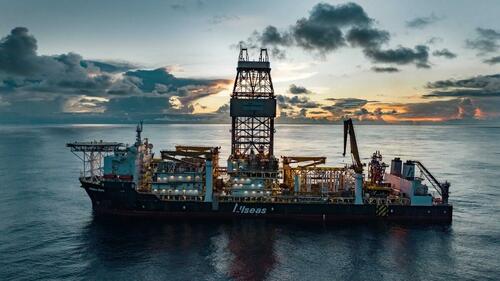
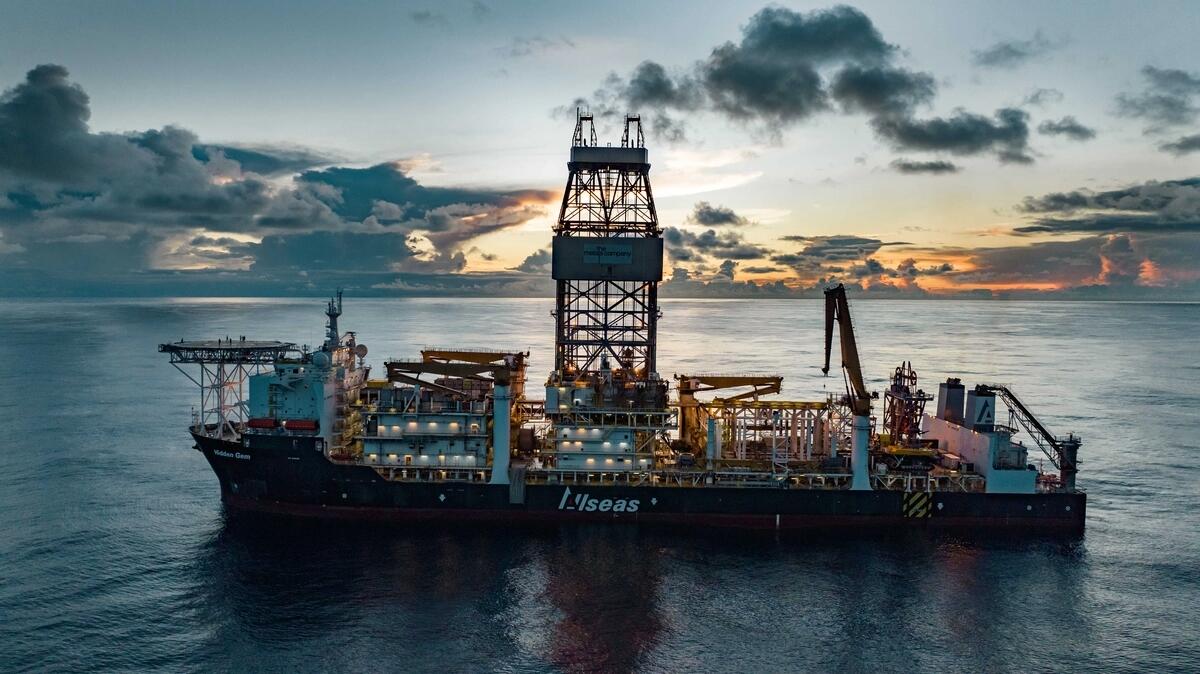
In 2022, TMC and Allseas successfully lifted over 3,000 metric tonnes of nodules from the seafloor and transferred them to the hold of the Hidden Gem vessel. The Metals Company
Experts estimate that 43 of 60 minerals listed by the U.S. as critical to the economic and national security of America in 2025 can be found on the outer continental shelf, according to Congress.
The agency released the first images of geologic seafloor samples acquired through a survey project to map and characterize more than 30,000 square nautical miles of federal waters in the U.S. exclusive economic zone beyond the territorial waters of American Samoa in April.
“NOAA’s mapping missions serve as a reminder that ocean exploration is a vital piece of our nation’s economic development,” NOAA Administrator Neil Jacobs said in a statement.
The data gathered from the project will enable science-based decision-making to support responsible development, Jacobs said.
Tyler Durden
Wed, 05/06/2026 – 17:40