Bubble-Wrapped World: How Safety Culture Has Destroyed Our Sense Of Adventure
Authored by Murray Lytle via The Epoch Times,
Are Canadians less adventurous than they once were? It’s hard to argue otherwise.
Alexander Mackenzie was only 24 when the North West Company named him chief fur trader at Fort Chipewyan, in what is now Alberta. A few years later, in 1789 he travelled north along what is now known as the Mackenzie River to become the first European to reach the Arctic Ocean overland. Four years later he crossed the Rocky Mountains and was the first European to reach the Pacific Ocean, beating Americans Merriweather Lewis and William Clark by a full dozen years.
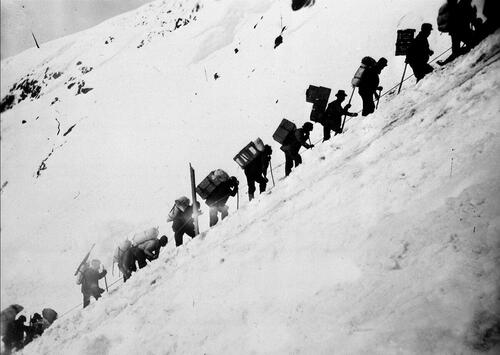
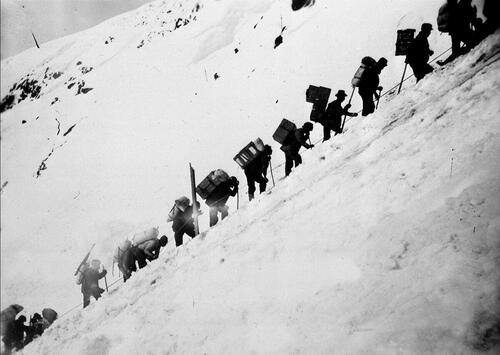
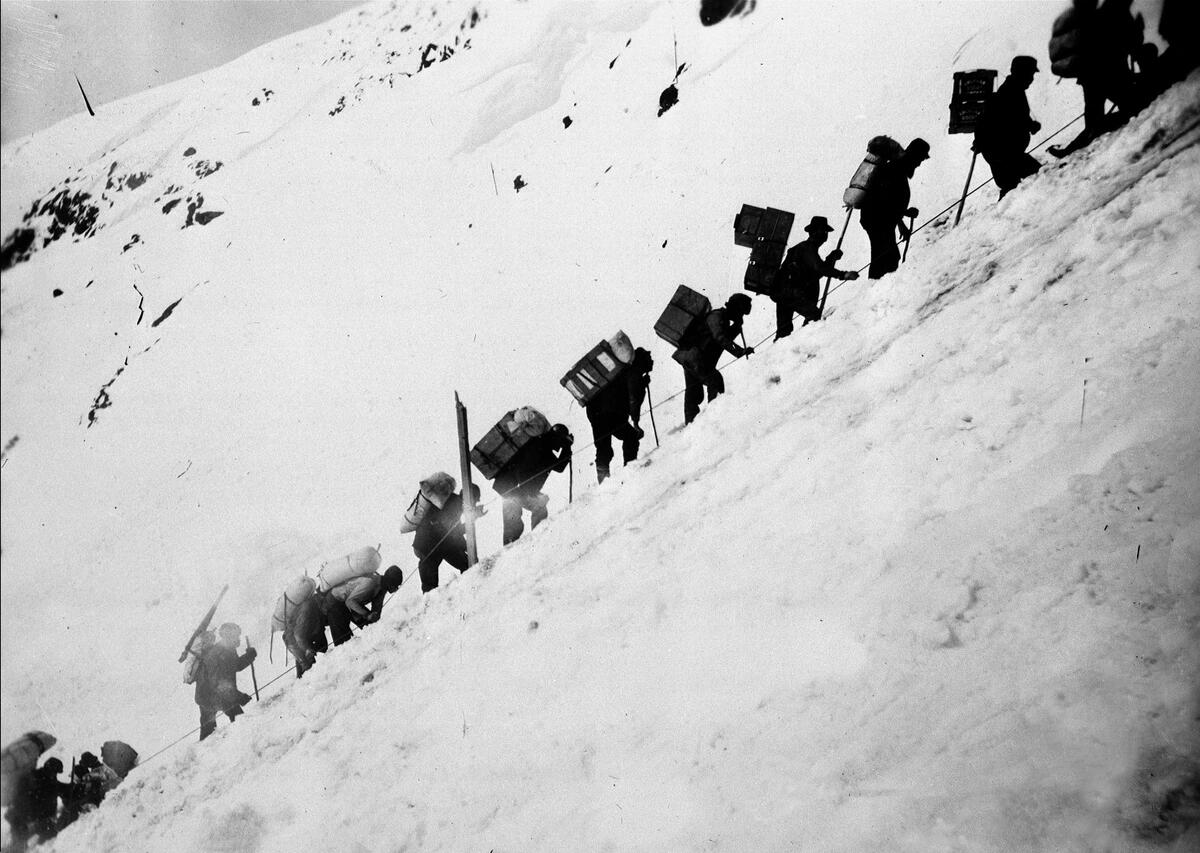
In 1898, Martha Purdy arrived in Dawson City to escape a failed marriage and make her fortune in the Klondike Gold Rush. It was while climbing the notorious Chilkoot Pass that she discovered she was pregnant with her third son. She later remarried and, as Martha Black, was the second woman to be elected to Canada’s Parliament. She was also a successful entrepreneur and a world-renowned expert on wild flowers.
Canadian history is filled with tales such as these. Explorers, soldiers, settlers, and other restless souls who endured great hardships and did great things.
There is a natural sense of awe that arises when retelling such lives filled with adventure. To our modern selves, they appear as fascinating aberrations, gifted men and women with unusual appetites for risky or dangerous undertakings. Their willingness to set out into the unknown strikes us today as thrilling, unnerving, and more than a bit foolhardy. But while their accomplishments may be striking, they lived in more adventurous times.
Today, society shrinks from adventure and the unknown.
Through a combination of practical circumstances, changing social standards, and dramatic shifts in individual risk tolerance and government behaviour, opportunities for adventure have been drastically curtailed.
How can Canadians get that sense of adventurousness back?
“An adventure is only an inconvenience rightly considered”, G.K. Chesterton once wrote. “An inconvenience is only an adventure wrongly considered.” There is a case to be made that adventures are simply harder to come by these days.
There are no more blank spaces left on maps, and hence no places for modern-day Mackenzies to discover.
The omnipresence of the internet and GPS similarly makes it almost impossible to get truly lost anymore. And if you do, help is usually close at hand.
Beyond these practical limitations, however, it seems incontestable that society today is less interested in promoting, facilitating, or participating in adventurous life experiences.
No one talks of running away with the circus or joining the French Foreign Legion anymore, even in jest. According to Statistics Canada, twice as many millennials are still living at home as was the case with previous generations. And if any of these young adults do go away, it’s more than likely to be an adventureless “gap year” holiday between graduate degrees recorded in minute detail on Snapchat and Instagram.
The perpetual childhood of today’s younger generations contrasts sharply with the youthful accomplishments of past eras. William Wilberforce, for example, was elected to the British Parliament at age 21 and then proved instrumental in ending the trans-Atlantic slave trade. His friend William Pitt became Prime Minister at 24, and spent his career fighting the French emperor Napoleon Bonaparte, who became a general at 24. Quite a lot can be accomplished when one starts early.
Other factors that limit the availability of adventure in our post-modern era include the suffocating impact of the welfare state. When Mackenzie left his family home at 15 to become an apprentice in the fur industry, it was because he had little choice. He needed to make his way in the world as a teenager. The same urgency applied to Black when she decided to escape a failed marriage by travelling to the Yukon. With no government to hold your hand, adventure follows. Popular culture in earlier eras also did its bit as well by celebrating explorers and adventurers as celebrities in the same manner that we laud singers and athletes today.
Just as adventure was once regarded as a social virtue to be admired, society today aggressively enforces the opposite expectation—that it is our duty to avoid risk at all costs. In their 2021 book “The Coddling of the American Mind,” social psychologist Jonathan Haidt and lawyer Greg Lukianoff take a close look at the impact of a creeping safety culture on the behaviour of younger generations.
Children, the authors observed, are now deliberately shielded from any sense of risk or uncertainty. How can anyone—young boys most of all—learn about the world around them when school principals announce at the onset of every snowfall that “all snow must stay on the ground.” The ideal of adventure and resilience has been replaced by a debilitating sense of fragility and risk-avoidance.
So is the dream of looking over an untravelled horizon that animated people like Alexander Mackenzie or Martha Black completely dead in the 21st century? Not exactly.
Adventure should properly be considered a spirit, not a place.
It is driven by a powerful mixture of curiosity, necessity, and an openness to experiencing new things. And it can be found wherever uncertainty reigns. Today, that might entail travelling to strange lands, meeting new people, or even engaging in uncomfortable discussions about whether Alberta should remain part of Canada forever.
Wherever the unknown lies, adventure can be found.
Tyler Durden
Sun, 05/24/2026 – 17:30